


Amenhotep II was the seventh pharaoh of the 18th Dynasty; he ruled from 1427 to 1401 BC. He was born to Thutmose III and Merytre Hatshepsut. He was famous for his military expeditions in Nubia and Syria. His reign is popularly known from his Egyptian inscriptions that describe his military campaigns and his efforts to maintain Egypt’s influence.
Table of Contents:
-
Overview
-
Early life of Amenhotep II
-
What was Amenhotep II known for?
-
Amenhotep II and Moses
-
Amenhotep II and the Valley of Kings
-
Amenhotep II Mummy
-
Legacy of Amenhotep II
-
What happened to Amenhotep II?
-
Amenhotep II’s First-Born Son
-
Amenhotep II Face Reconstruction
-
Amenhotep II Facts
-
Explore the legacy of Amenhotep II with Swan Dahabiya
-
FAQs
-
Conclusion
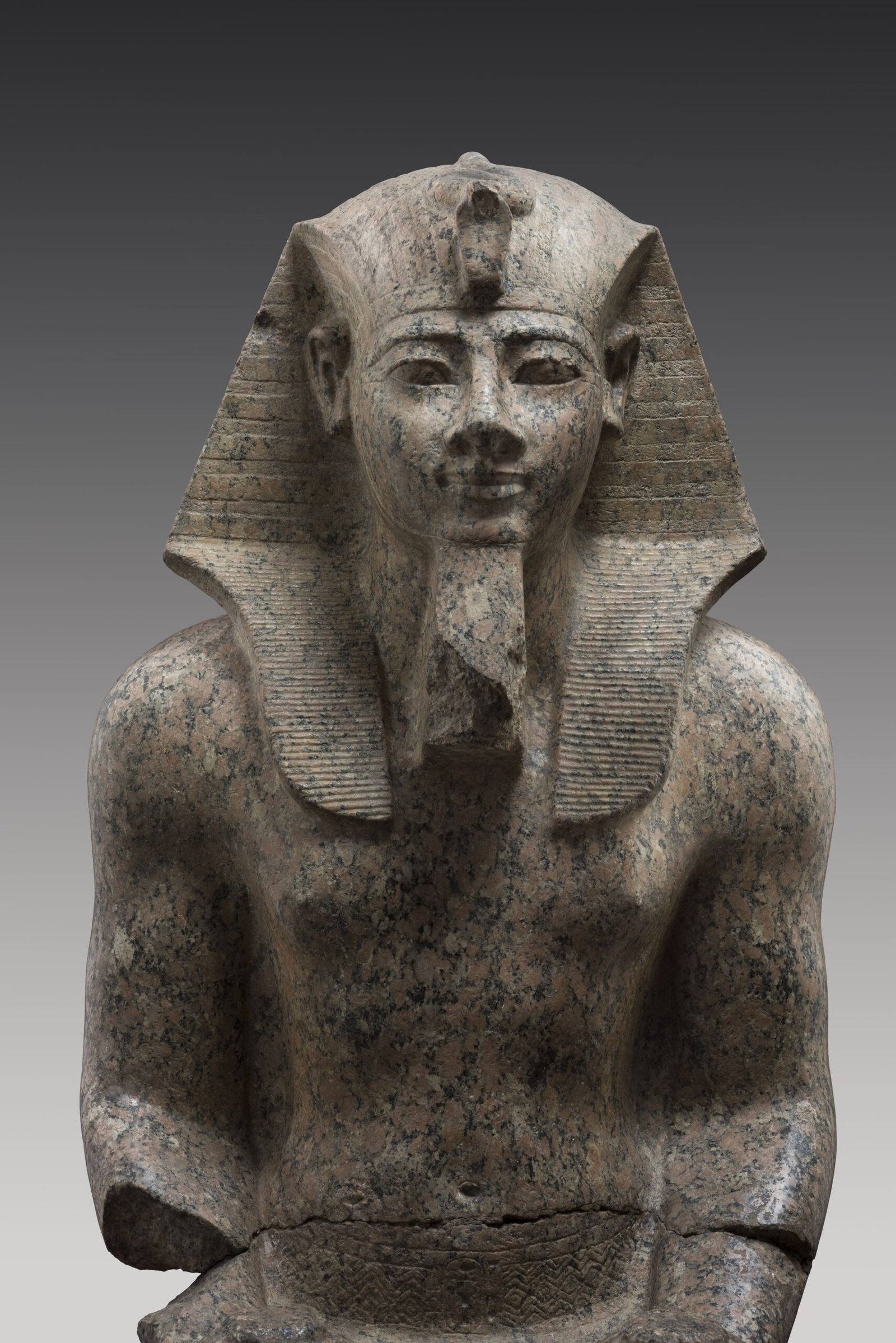
Overview
Here are the key details about Amenhotep II, his reign, and family.
| Facts | Details |
| Name | Amenhotep II |
| Dynasty | 18th |
| Reign | 1427-1401 BC |
| Father | Thutmose III |
| Mother | Merytre Hatshepsut |
| Predecessor | Thutmose III |
| successor | Thutmose IV |
| Known or proposed children | Thutmose IV, Webensenu, Amenemopet, Nedjem, and others whose identity remains uncertain. |
Early life of Amenhotep II
He is the son of the famous pharaoh Thutmose III and the minor wife of the king named Meruytre Hathshepsut. From a very young age, he began training in warfare, chariot riding, and hunting, which were among the important skills of an Egyptian king. Many historians consider Amenemhat to be the eldest son of Thutmose III and Queen Satiah, and he was a capable heir, but somehow he and his mother both died, which is why the throne was passed to Amenhotep.
What was Amenhotep II known for?
He was one of the Egyptian pharaohs who ruled Egypt from 1427 to 1401 BC. He was well known for his physical strength and military campaigns. He led military campaigns to Syria and Nubia and tried to maintain the empire that was inherited from his father, Thutmose III. Moreover, he also completed some architectural works that were initiated by his father. He was mainly recognized because of three major achievements, which include:
Military campaigns
After becoming pharaoh, Amenhotep II led military expeditions to Syria and Nubia. The main goal of this expedition was to stop rebellions and keep Egypt’s control over these regions. He focused on protecting the territories that Egypt already controlled.
Athletic Strength
According to inscriptions, he was excellent in archery, hunting, rowing, and physical endurance, and some historians agree that Amenhotep II valued physical fitness and military skills.
Building Projects
He constructed many projects that were begun by his father, including Karnak, the Temple of Amada (in Nubia), Giza, and other important religious sites. These monuments helped to strengthen the royal authority of Egypt.
Amenhotep II and Moses
There is no evidence regarding this, but many biblical scholars and historians have said that Amenhotep may have been the pharaoh during the period when Moses led the Israelites out of slavery in Egypt, and this idea is based on certain interpretations.
However, there is no historical evidence that proves that Amenhotep II was the pharaoh of the Exodus. Many Egyptian inscriptions from his reign do not describe the events recorded in the Bible, and scholars continue to debate both. This is the major reason why the connection between Amenhotep II and Moses remains a theory rather than an established historical event.
Amenhotep II and the Valley of Kings
The Valley of Kings has one of the strongest connections between Amenhotep II and Egyptian history. During the New Kingdom, many pharaohs were buried there. Amenhotep II was buried in Tomb KV35. Today, KV35 remains one of the most significant discoveries because it preserves several members of Egypt’s royal family.
Amenhotep II Mummy
The mummy of Amenhotep II was discovered in 1898 by French archaeologists named Victor Loret inside tomb KV35. Unlike many other royal mummies that had been moved from their original tombs, Amenhotep II’s mummy was still lying there, and his mummy is considered one of the best-preserved royal mummies from ancient Egypt.
Legacy of Amenhotep II
He helped preserve Egyptian power during the New Kingdom. His reign is still remembered for several reasons, which are mentioned below:
- Strong military leadership
- Athletic reputation
- Temple construction
- Well-preserved mummy.
- Tomb in the Valley of Kings
What happened to Amenhotep II?
He died in 1401-1400 BC after ruling Egypt for more than two decades. After his death, he was buried in tomb KV35 in the Valley of Kings, and his son Thutmose IV became the new pharaoh. Later, his tomb served as a protected hiding place for other royal mummies. Because of this, his tomb is considered one of the most important archaeological discoveries in Egypt.
Amenhotep II’s First-Born Son
Amemnhotep has several known or proposed children, including Thutmose IV, Webensenu, Amenemopet, and Nedjem. However, many scholars believe that the elder son died before inheriting the throne, which allowed Thutmose IV to become the king. As the events are incomplete, historians cannot say with certainty who was the first born son of Amenhotep II.
Amenhotep II Face Reconstruction
Many modern researchers have created digital face reconstructions of several Egyptian pharaohs. However, there are widely shared artistic or digital reconstructions of Amenhotep II’s face, but still there is not any universally accepted official reconstruction of his face.
Amenhotep II Facts
- He was the seventh pharaoh of the 18th dynasty.
- He was the son of Thutmose III.
- He was famous for his physical strength and military campaigns.
- He was buried in the Valley of Kings.
- His mummy was found in 1898
- His son became the next pharaoh.
- His tomb also protected other pharaohs.
- His reign helped keep Egypt powerful.
Explore the legacy of Amenhotep II with Swan Dahabiya
However, Amenhotep II was one of the most notable rulers of the 18th dynasty, and even today you can explore his legacy along the Nile River. With Swan Dahabiya, you will get a chance to explore the major monuments that are situated between Aswan and Luxor, without compromising comfort. Our guided tour excursions to the monuments, including the Valley of Kings, will allow you to explore the legacy of Amenhotep II through temples and monuments.
FAQs
Who was Amenhotep II?
He was the seventh pharaoh of the 18th dynasty of Egypt. He was born to Thutmose III and Merytre Hatshepsut, and he ruled Egypt from 1427 to 1401 BC.
What was Amenhotep II famous for?
He was a well-known pharaoh of the 18th Dynasty, and he is remembered for his military expeditions, athletic strength, and architectural work.
When was Amenhotep II’s mummy discovered?
Amenhotep’s mummy was discovered by Victor Loret, a French archaeologist, in March 1898.
Who succeeded Amenhotep II?
He was succeeded by his son named Thutmose IV.
Who was Amenhotep II’s first-born son?
Some historians believe that his elder son died before inheriting the throne, and due to incomplete historical evidence, the identity of his first born son remains uncertain.
Is there an official face reconstruction of Amenhotep II?
Although there are many AI- face-generated concepts of Amenhotep II available on social media, there is no universally accepted face reconstruction of Amenhotep II.
Was Amenhotep II the pharaoh of Exodus?
However, some biblical scholars and historians believe that Amenhotep II was the pharaoh of the Exodus, but there is no historical and archaeological proof that gives certainty about this.
Conclusion
Amenhotep II was one of the great pharaohs of Egypt; he is famous for his military expeditions, athletic strength, and building projects. He was the son of Thutmose III and Merytre Hatshepsut. He tried to maintain his father’s legacy. After his death, he was succeeded by his son Thutmose IV. Today, his tomb, mummy, and monuments continue to provide valuable insights into his history and the culture of ancient Egypt.
If you want to explore the legacy of this pharaoh along the Nile River, then you can get in touch with our team, and they will make your journey memorable and worthwhile.