


Temple of Kom Ombo: A Rare Dual Temple on the Nile
Table of Content
-
Introduction
-
The religious importance of the Kom Ombo temple
-
Architectural design of the Kom Ombo Temple
-
Where is Kom Ombo in Egypt?
-
How do you explore the Kom Ombo temple?
-
How to pronounce Kom Ombo?
-
Conclusion
Introduction
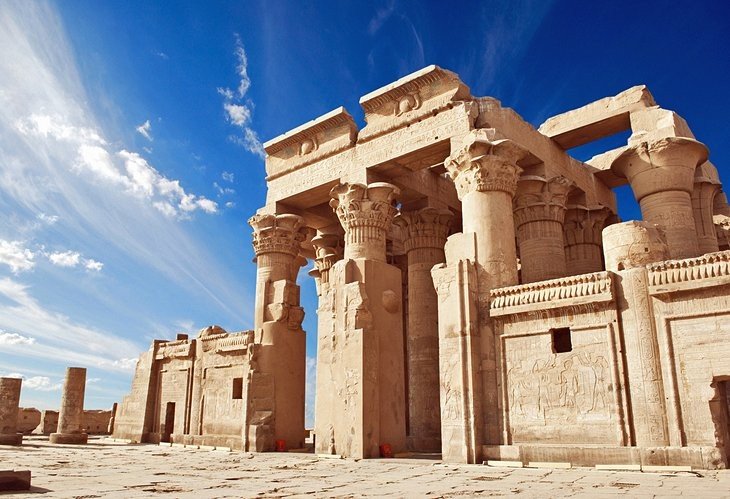
The temple of Kom Ombo is a prominent ancient religious place situated along the River Nile and known for distinctive religious rituals, and also two major deities are respected in a single temple; it’s like a twin temple. The rare design of the temple with two entrances and a symmetrical design is rare in Egyptian temples, but you can see it in this temple. Even historians mark the design of the temple as its unique feature and study it in detail by archaeologists.
It is the only temple from ancient Egypt, which is famous for its dual identity; it is dedicated to Horus the Elder and God Sobek. Usually, the temple is explored by Nile Dahabiya cruises in Egypt; it is an important port of call during the sailing journey between Aswan and Luxor. In this blog, mention the cultural significance of the temple, its history, and also get answers to some commonly asked questions about the Temple of Kom Ombo.
The religious importance of the Kom Ombo temple
What makes Kom Ombo different from other Egyptian religious places? The worshipping of the dual gods makes it a unique and fascinating historical monument for the tourists. It is devoted to the god Sobek, seen as the god of fertility and the Nile, represented with a crocodile head, and god Horus, specifically Horus the Elder, associated with kingship and protection.
The temple is perfectly divided into two parts, one side of which is dedicated to Horus the Elder and the second to God Sobek. Each section has its entrances, halls, and sanctuaries, functioning almost like two temples in one structure. This duality symbolizes balance between opposing forces, such as chaos (god Sobek) and order (god Horus).
This religious place is used to serve two major deities; here priests used to conduct the different rituals for each god. The crocodile-headed god, Sobek, is associated with protection, the Nile, and fertile land. worshipped for fertile lands near the Nile and for protection from the river Nile; the crocodile head signifies him as the controller of the Nile.
Whereas the god Horus the elder is worshipped for royal authority and divine kingship and for protection from evil forces. This site also highlights the multiple beliefs that were associated with a single place. The Kom Ombo temple also has a unique crocodile museum, which has mummified crocodiles, that passengers of the Dahabiya Nile cruise can explore during their luxurious sailing journey along the Nile.
Architectural design of the Kom Ombo Temple
The symmetrical design of the temple is its highlight, which is rare to see in any other Egyptian temple. The structures are thoughtfully created, and also, until today, the temple is well-preserved. It reflects the mastery of architects of the Ptolemaic Period; the temple was built around 180-47 BCE, which reflects the traditional Egyptian beliefs and also has proof of Greek influence.
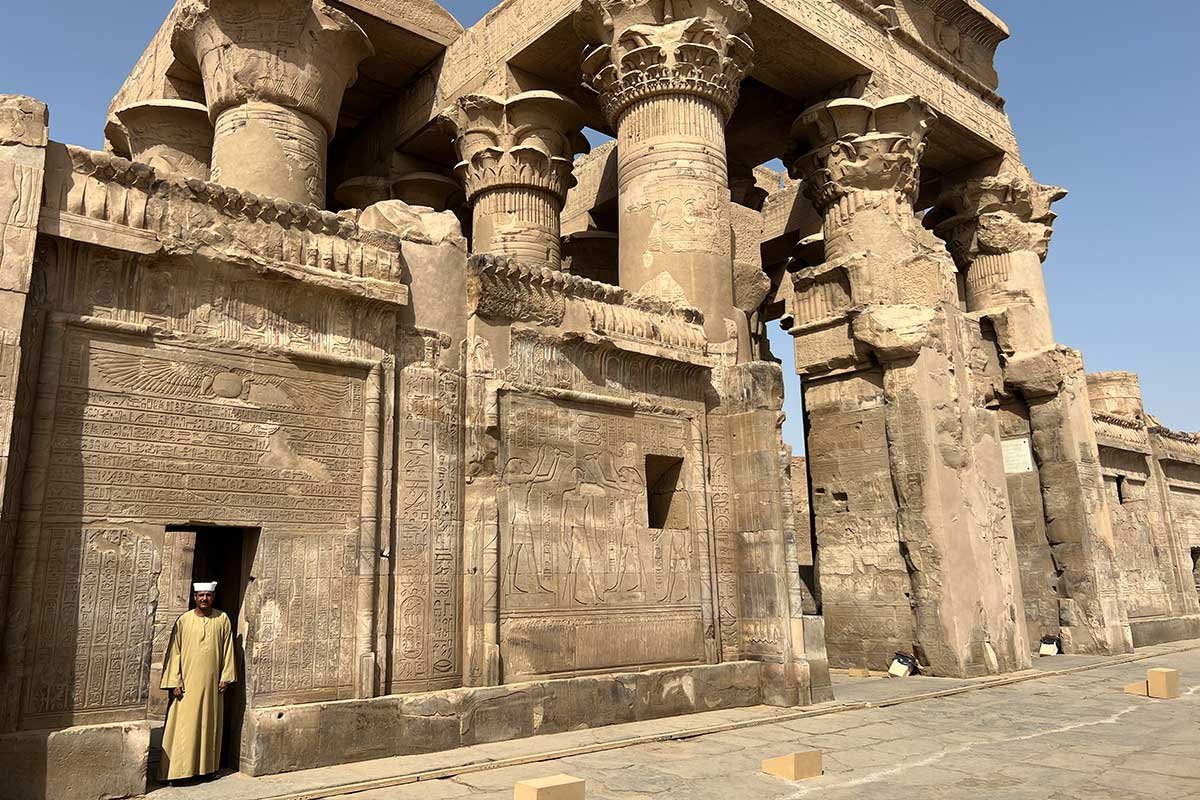
Key structural elements include the twin entrances leading into parallel courtyards, duplicate hypostyle halls (pillared halls), and two sanctuaries at the rear, each dedicated to god Sobek and god Horus. The columns are richly decorated with floral capitals and intricate carvings. The walls of the temple are made from sandstone, chosen for durability and ease of carving. It is an exceptional design that demonstrates advanced planning and precision, reflecting expert craftsmanship of the builders of the Ptolemaic age.
Where is Kom Ombo in Egypt?
Kom Ombo is a town in Upper Egypt, which is situated on the east banks of the Nile. It is located around 40-50 kilometers approx. north of Aswan, a major port for the cruises, as the Temple of Kom Ombo belongs to the Ptolemaic age. During the Nile River cruise dahabiya, passengers sail and explore the area of Kom Ombo; the best views are offered during the sunset as shadows of the walls and pillars create beautiful visuals.
How do you explore the Kom Ombo temple?
Visitors can observe the temple’s symmetry firsthand, making it visually and intellectually engaging. Popular highlights for tourists include detailed wall carvings of gods and rituals. Views of the Nile at sunset. The adjacent crocodile museum all offer an exclusive evening exploration experience to the best Dahabiya Nile cruise passengers. Another perk of exploring it with the
Does the dahabiya sail near the Kom Ombo temple?
How to pronounce Kom Ombo?
The pronunciation of Kom Ombo is “Kohm AHM-boh.” The “Kom” here is pronounced like “comb,” which also rhymes with “home,” which in Arabic means “hill.” The Ombo is pronounced like “AHM-boh,” which rhymes well with combo, while speaking the stress should be on the first syllable of each word, which then sounds like KOMM-OMM-boh in speech.
Conclusion
The Temple of Kom Ombo is rarely known for its unique architecture and dedication to the dual god. It has an exceptionally balanced design, which symbolizes the richness of the culture in the ancient world. It combines both the religious personalities of both god Sobek and god Horus. See the carvings of both the gods, so book your choice of cruise or small luxury boat; exploration of temple Kom Ombo is a must-have experience.
Other Useful Link
Dahabiya Nile Cruise All-Inclusive Package: Costs & Inclusions Explained