


Know everything about Egypt’s Kom Ombo Crocodile Museum
Table of Contents
-
Introduction
-
What is Kom Ombo famous for?
-
Where is the Crocodile Museum?
-
What kind of god was Sobek?
-
What are the highlights of Kom Ombo Temple?
-
Is the Kom Ombo Temple worth visiting?
-
Were mummified crocodiles found in Egypt?
-
What was found inside a 3,000-year-old crocodile?
-
Conclusion
Introduction
In Egypt, the Crocodile Museum at Kom Ombo Temple is considered the first, largest, and most significant museum dedicated exclusively to the ancient worship of crocodiles, exhibiting the preserved crocodiles through the process of mummification. It is a well-designed, air-conditioned museum located just beside the historical temple of Kom Ombo.
Here, you will gain insight into the Kom Ombo temple and crocodile museum, with features that make it a tourist destination. Also, at last, you will know about what was found inside a 3,000-year-old crocodile, which is being studied by the researchers.
What is Kom Ombo famous for?
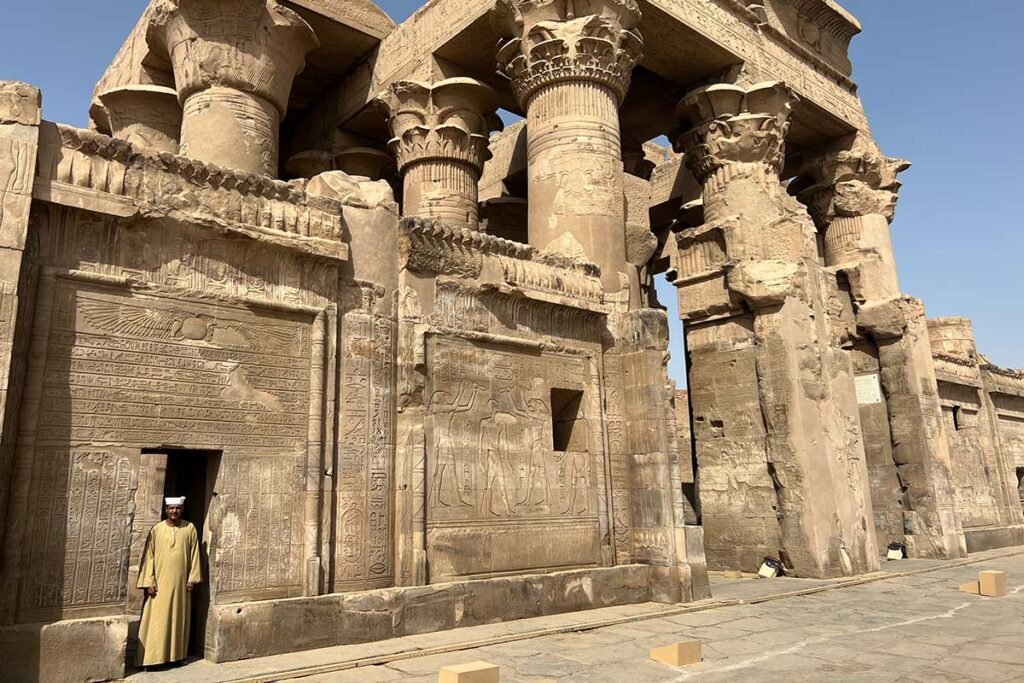
The town of Kom Ombo is famous for the historical temple of Horus and Sobek; prominently, travelers visit to see the Kom Ombo crocodile museum mummies. First, the town is famous for a unique dual temple, built during the Ptolemaic period in ancient Egypt. Secondly, the temple premises house the unique and sacred mummies of the crocodile. Also, the unique carvings and Nilometer at the Kom Ombo temple attract tourists for exploration and offer them unique experiences crafted by mythology and architecture.
Where is the Crocodile Museum?
The Kom Ombo Museum is located in the town of Kom Ombo in Upper Egypt, beside the Temple of Kom Ombo, which is a dual-god temple dedicated to the god Horus and the crocodile god Sobek. Most of the time, the temple and museum are visited by the Dahabiya Nile cruise passengers, as it is a major stop during the Nile sailing itineraries.
crocodile museum in egypt
What kind of god was Sobek?
Sobek was an ancient mythological god in the Egyptian scriptures, also known as the crocodile god. He was associated closely with fertility, strength, military power, and protection. The god Sobek was usually represented as either a crocodile or a man with a crocodile head. Ancient Egyptians feared crocodiles because of their power in the Nile; that is a major reason they showed respect to Sobek. Also, some believe that he was the controller and protector of the Nile. To him, the Kom Ombo Temple and Crocodile Museum were dedicated. Travelers on the luxury Dahabiya Nile Cruise can explore and witness the unique ancient traditions.
What are the highlights of Kom Ombo Temple?
The Temple of Kom Ombo has a lot of unique things that you may not find in temples at Luxor. So, below are 5 noticeable features of the temple due to which it is a must-visit on an Egypt vacation itinerary.
Dual-temple design: The Kom Ombo Temple is divided symmetrically into two parts, which are dedicated to two different gods. One is the falcon-headed god Horus, and another is the crocodile-headed god Sobek.
Ancient Medical Art: Carvings on the temple show hieroglyphics and paintings about the surgical tools and medical instruments that offer insights into the ancient Egyptian medicine world.
Nile Views: The sunset and sunrise views of the temple from the Nile River cruise dahabiya decks are totally mesmerizing. Creates magical backgrounds that reflect the history of ancient Egypt, and nature adds charms to it—a perfect, picturesque scene.
Detailed Hieroglyphs: The walls of the temple are covered with religious carvings depicting scenes from ancient mythology that offer insight into Egyptian religious practices to the visitors.
Crocodile Museum: It is a unique museum that houses around 22 mummified crocodiles of varying sizes that were found in nearby areas. The belief says that mummified crocodiles are related to the worship of the god Sobek.
Is the Kom Ombo Temple worth visiting?
Yes, visiting the Kom Ombo temple is worth it, especially for travelers interested in knowing about Egyptian history, unusual temple layouts, and Nile history. Unlike other temples, Kom Ombo offers insight into the direct connection to the animal worship traditions followed in ancient times. The combination of the temple and the crocodile museum creates a more vast historical experience of the site. It is a major stop for the Dahabiya Nile Cruise Aswan to Luxor trips, so it is included in all Nile sailing itineraries.
Were mummified crocodiles found in Egypt?
Yes, numerous mummified crocodiles have been discovered in Egypt, specifically at Kom Ombo and Qubbat al-Hawā; these are major places dedicated to God Sobek. The researchers have found complete skeletons and isolated heads of crocodiles during the excavations. The crocodiles are treated with resin, while a crocodile that is 2,500 years old, found in 2023, has uncovered an alternative method of conserving them, which is sand burial. Also, the advanced CT scans have shown that these creatures were fed fish as their last meals before being killed. Ancient Egyptian scriptures say that mummified crocodiles are considered a living manifestation of the god Sobek.
What was found inside a 3,000-year-old crocodile?
In recent years, a 3,000-year-old crocodile was studied at the University of Manchester, which says that the fish was their last meal offered to them, as it was found in an undigested state. This can be because the fish are offered as bait to the crocodile for catching them. The crocodile, which was found, is studied because the parts were not removed during the mummification process. Also, the remains of small stones in the stomach were found. These discoveries provide insight into how sacred animals were treated in ancient Egyptian temples.
Conclusion
The crocodile museum in Kom Ombo offers unique insights into the worship of animals in the ancient world. Travelers experience something unique rather than traditional sightseeing but also see examples of Egyptian devotion and worship through the crocodile mummies. The site remains one of Upper Egypt’s most memorable cultural experiences that travelers may not get anywhere else during their vacation.