


Table of Contents
-
Brief Summary
-
Where is King Tut’s tomb?
-
Who found King Tut’s tomb?
-
When was King Tut’s tomb discovered?
-
Why is Tutankhamun’s tomb famous?
-
What is inside King Tut’s tomb?
-
Is King Tut still in his tomb?
-
Is King Tut’s tomb still sealed?
-
Conclusion
Brief Summary
The Valley of the Kings, situated on the west bank of the River Nile, not only has tombs for royals and pharaohs, but it also holds the true essence of Egyptian culture and insight into how life was seen in ancient times. One of the major excavations is of Tut’s tomb, as around 5,000 artifacts were found with the burial body of Tutankhamun in the Valley of the Kings.
Surprisingly, where most of the tombs in the Valley of the Kings were looted over centuries, King Tut’s tomb was found untouched, and it’s an achievement for the historians and archaeologists researching in Egypt. From mask to chariot, everything was found in the tomb as it may have been placed during the actual burial practice. So, below is a mention of Tut’s tomb, about the treasure, and its importance in Egyptian history.
Where is King Tut’s tomb?
In the Valley of the Kings, the tomb of Tutankhamun was found. KV62 is King Tut’s tomb, one of the most visited tombs in the Valley of the Kings. It consists of four chambers, an entrance staircase, and a corridor. The tomb was small, a little dug into the land, and over time may have been filled with debris because of flooding of the Nile, which can be the reason for it not being able to be found by robbers.
Who found King Tut’s tomb?
Howard Carter and his partner George Herbert were the ones who discovered King Tut’s tomb. It resulted in attracting media and journals for recording Tut’s tomb, which made it famous and a milestone in Egyptology. After the discovery, it took around 10 years to carefully document, clean, and remove thousands of objects from the tomb.
Recently, the Grand Egyptian Museum in Cairo, with the artifacts of Tutankhamun, was exhibited, making it one of the museums dedicated to a single kingdom. It was recently opened to the public in November 2025.
The Tutankhamun galleries provide around 7,200 square meters of display space for the king’s treasures and burial objects. Visited by tourists while exploring Cairo before or after the Dahbiya Nile cruise experiences, it is usually visited as part of a combined tour package of Cairo and Nile exploration.
How Much Is King Tut’s Tomb Worth Today?
There’s no official price tag for King Tutankhamun’s tomb or its valuables, although some sources have estimated the collection’s value to be close to $1 billion.
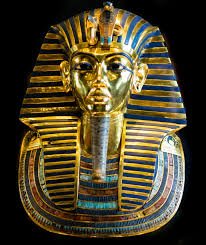
The tomb contains nearly 5,000 artifacts, which include golden masks, coffins, jewelry, furniture, weapons, and several other objects. But the Golden Mask is the most famous and iconic item found in the tomb. It is made from gold and is decorated with colored glass and stones. These relics provide a thorough picture of ancient Egyptian society, art, religion, and royal tradition.
They are valued for historical, cultural, and archaeological importance rather than the amount of gold or other precious elements that they contain. The treasures are not treated like normal items that can be bought and sold. Many of them are retained as part of Egypt’s national heritage and are displayed for visitors to learn about ancient history
When was King Tut’s tomb discovered?
The tomb of King Tutankhamun was discovered in 1922 by the British archaeologists and Egyptologists Howard Carter and his patron, George Herbert, the 5th Earl of Carnarvon. He is known now for the excavation and discovery of Tut’s tomb. It is believed that when Howard When Carter first saw the tomb, he was amazed because it was one of the nearly intact tombs that was packed with over 5,000 artifacts. A fascinating thing about the discovery was when Howard saw the mask on the mummified body of Tutankhamun, as it was used to be placed in ancient times.
Also, the small size of the tomb depicts that it may be a non-royal tomb, which is believed to have been constructed for his vizier Ay, but when Tutankhamun died prematurely, he was buried in the KV62 (name of the tomb) as royal tombs were not yet ready for burying, which were commissioned by the king Tut.
Why is Tutankhamun’s tomb famous?
Tutankhamun was believed to be a “boy king” and came to light when his mummified body was tested. The age of the mummy was not as advanced as that of other pharaohs. According to the Egyptian scripture, he is a young ruler who has been crowned at the age of 8 or 9. He died at the age of 20; it is believed that maybe a chariot accident was the real cause behind his death at an early age, which is still a mystery.
King Tutankhamun is one of the pharaohs who is not very famous for his ruling period but is widely known for his nearly intact tomb, which was found in the Valley of the Kings, and Egyptologists are uncovering the truth of Egyptian civilizations.
What Is Inside King Tut’s Tomb?
The tomb of King Tut was filled with nearly 5,000 artifacts, which include a chariot, a royal bed, jewelry, essentials, clothes, and, most uniquely, the sarcophagus in which the body was kept.
The main sections include the entrance corridor, antechamber, burial chamber, and treasury. In these chambers, things like golden statues, jewelry, and precious stones were found.
At the entrance chamber, chariots and weapons with furniture and ceremonial objects were first seen as recorded during the excavation. The tomb contained many personal items and treasures that were meant to accompany Tutankhamun in the afterlife.
At the burial chamber, middle and outer coffins were found, which were used to wrap the mummified body of Tutankhamun. His golden mask, which was placed over his face, was also found inside the tomb. The chamber also contained Tutankhamun’s crown and other royal treasures.
During the excavation, Tutankhamun’s flail and crook were also found along with the Eye of Horus amulet. Together, all these objects provide a detailed picture of the life, art, religion, and ritual traditions of ancient Egypt.
Major objects found in the King’s Tomb
- Golden burial mask
- Three nested coffins
- Quartzite sarcophagus
- Golden throne
- Chariots
- Canopic jars
- Model boats
- Trumpets
- Ceremonial daggers
- Amulets
- Sandals
- Board games
- Jewelry and precious stones
- Royal furniture and beds
- Clothing and personal items
- Golden statues
- Canopic coffinettes
- Flail and crook
- Vessels and ceremonial objects
Is King Tut still in his tomb?
Yes, King Tut was still kept in his tomb in the Valley of the Kings, where it was found. Tourists can see the mummified remains of King Tut during a visit to the tomb. Most of the processions and treasury elements were moved to Egyptian museums. But tourists can visit the tomb to see the paintings and carvings on the walls. For visitors to the Valley of the Kings, the mummified remains of Tutankhamun are kept in a special protective glass case.
Is King Tut’s tomb still sealed?
No, the tomb was not sealed, as it was opened during the excavation in 1922 by Howard Carter. Today, the tomb is precisely preserved for exploration purposes.
It also has the second-highest entrance fee in the Valley of the Kings, after the tomb of Seti I. Today, Tutankhamun’s mummy remains inside the original tomb, where it is kept in a climate-controlled glass case. Tourists can also visit the tomb to see the paintings and carvings on the walls.
Conclusion
The discovery of Tut’s tomb remains one of the legendary research projects that was successful. The Valley of the Kings offers a rare glimpse of the ancient Egyptian burial practices. So, it’s advised to explore it. Well, on the Dahabiya Nile cruise in Egypt, the travelers get guided shore excursions to the Valley of the Kings with the cruise ride while sailing through Luxor. Book yours now and witness something unique and equally fascinating.
FAQ’s
Where is the King Tut exhibit now?
Many of King Tutankhamun’s treasures are now displayed at the Grand Egyptian Museum in Giza, Egypt.
Where is the golden mask now?
The golden mask is now displayed at the Grand Egyptian Museum near the Giza pyramids in Egypt.
Other Useful Links:-