


Table of Contents
-
Who is Ramses II?
-
How long did Ramses II rule?
-
Facts About Ramses II
-
List of Fifteen Millitary Campaigns by the Pharoh Ramses II
-
Why does Ramses have temples in Abu Simbel?
-
How many wives did Ramses II have?
-
How many children did Ramses II have?
-
How did Ramses II die?
-
Where is Ramses II’s mummy?
-
Conclusion
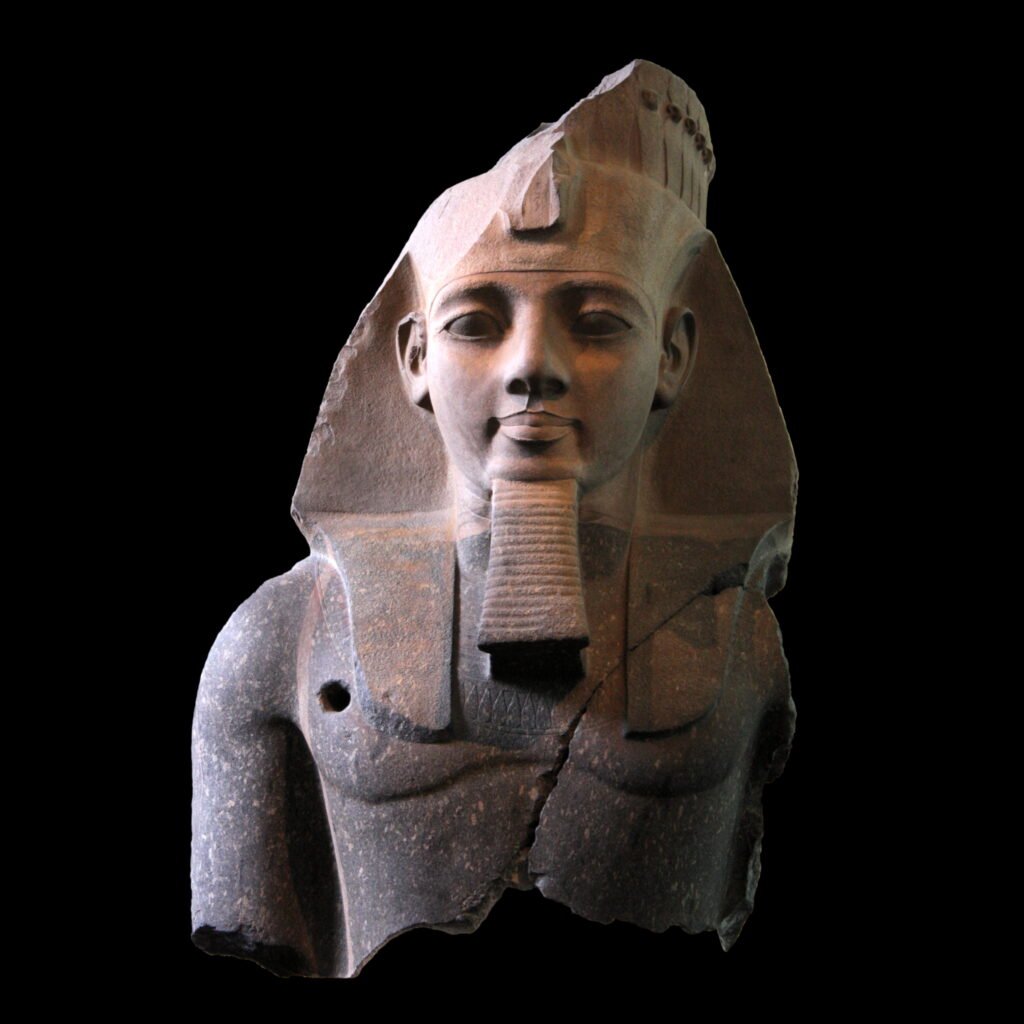
Who is Ramses II?
He is the son of Seti I, the second pharaoh of the Nineteenth Dynasty in the New Kingdom, and his mother is Tuya. His life span was 1303 BC–1213 BC, and he was famously known as Ramesses the Great, the successor of his father, and became the third pharaoh of the Nineteenth Dynasty in the New Kingdom of Egyptian history. He is among the most celebrated and powerful pharaohs, known for his military campaigns and warrior skills; also, he contributed significantly to the architecture of the Egyptian heritage, and to this day, tourists can witness it at Luxor and Abu Simbel.
How long did Ramses II rule?
He ruled for around 66 years 2 months, making him one of the longest-reigning pharaohs in the New Kingdom in ancient Egyptian history. Ramses II became the king of Egypt on 31 May 1279 BCE, according to the Egyptian records, as in the record the accession date is recorded as Year 1, Month 3 of Shemu (the harvest season), Day 27, at the age of 25.
The length of his reign is also supported by historical records, including writings preserved by the Jewish historian Josephus, who mentioned that Ramesses II ruled for more than 66 years, as the ancient documents, including the Papyrus Gurob fragment, confirm that Ramesses II’s reign continued into his 67th regnal year. He died shortly after beginning his 67th year as pharaoh around 1213 BCE; after his death, his son Merneptah succeeded him as ruler of Egypt.
Facts About Ramses II
- Ramses II has conducted around 15 military campaigns, all resulting in victory, excluding the famous Battle of Kadesh.
- Ramesses II was honored as the “Great God” by later Egyptian pharaohs, who admired his long reign and achievements and wished to share in his greatness and glory.
- He contributed to major expansions and inscriptions at important sites such as Karnak Temple and Luxor Temple, which tourists generally explore during Dahabiya Nile cruise journeys.
- He is believed to have had more than 100 children, including his successor Pharaoh Merneptah.
- He was a successful military leader and is best known for the Battle of Kadesh against the Hittite Empire around 1274 BCE.
- His reign led to one of the earliest known peace agreements in history, the Egyptian-Hittite Peace Treaty.
- His mummy was discovered in 1881 at a Dier el-Bahari royal cache, but actually he was buried at KV7 at the Valley of the Kings, which was later moved to Dier el-Bahari.
- He built the Ramesseum, his grand mortuary temple on the west bank of Luxor, which is also known as the Theban necropolis.
- Ramesses II had many wives and children. His most famous queen was Nefertari, for whom he built a beautiful temple at Abu Simbel.
- During his long reign, Egypt experienced a period of stability, wealth, and influence, becoming one of the strongest powers of the ancient world.
- By the 28th year of his reign, Ramesses II showed strong devotion to the god Amun, placing him above other Egyptian deities. This is recorded in ancient texts found on ostraca (inscribed pottery fragments) discovered at Deir el-Medina.
- Abu Simbel Temples are among his most famous creations as The temples feature four massive seated statues of Ramesses II, each about 20 meters high, carved directly into the mountain exterior.
- The Great Temple of Abu Simbel was dedicated to the gods Amun, Ra-Horakhty, Ptah, and Ramesses II himself, showing the pharaoh’s connection with the divine, and today it is one of the UNESCO World Heritage Sites.
- Ramesses II built the Pi-Ramesses (Per-Ramesses) capital city in the eastern Nile Delta, which became one of Egypt’s largest and most prosperous cities during his reign.
List of Fifteen Millitary Campaigns by the Pharoh Ramses II
- Battle of Kadesh (1274 BCE)
- First Syrian Campaign
- Second Syrian Campaign
- Campaign Against the Hittites in Northern Syria
- Campaign in Canaan (Palestine Region)
- Campaign to Retake Ashkelon
- Campaign Against the Shasu Nomads
- Campaign in Moab and Edom Regions
- Campaigns in Nubia
- Campaign to Suppress Libyan Threats
- Campaigns in the Western Desert
- Nubian Border Security Campaigns
- Campaigns Against Sea Peoples (Early Encounters)
- Northern Border Defense Campaigns
- Royal Demonstration Campaigns and Military Expeditions
Why does Ramses have temples in Abu Simbel?
Many people wonder why Ramses has chosen Abu Simbel for temples and not Luxor, where other pharaohs have built their religious monuments. It follows a series of reasons, which are explained below:
To Intimidate the Southern Neighbors: Abu Simbel is the southern front of the Nile; the large statues of Ramses II are constructed down the Nile to intimidate the invaders with a strong military presence.
Helped in Securing the Resources: The Nubian region, which was acquired during the Nubian campaigns, is important for Egypt for the trade of gold and valuable goods; building strong monuments here gives him political control over land and economic resources.
Other reasons include to commemorate his victory and military success, to strengthen Egypt’s presence in Nubia, to honor Queen Nefartari, and mainly to secure his eternal legacy.
Interestingly, the temples of Abu Simbel not only stand as proof of Ramses II’s power and status but also tell the modern world about the advanced knowledge of ancient Egyptians about astronomy and architecture, as the Abu Simbel temples were positioned so that twice a year, the rising sun illuminates the inner sanctuary of the Great Temple, reaching the statues of Ramesses II and the gods inside.
How many wives did Ramses II have?
The researchers say that he had around 200 wives throughout his 66-year reign as a pharaoh, of which only 8-11 got the tag of “Great Royal Wives,” who held the most prestigious status and major political powers.
His most prominent wives were:
Nefertari: She was Ramesses II’s first, most loved, and most famous queen. He built a special temple for her at Abu Simbel, showing her importance and his deep respect for her.
Isetnofret: She was one of Ramesses II’s main wives and the mother of his son Merneptah, who later became the pharaoh of Egypt.
Maathorneferure: She was a Hittite princess who married Ramesses II as part of a peace agreement between Egypt and the Hittite Empire after the end of the Battle of Kadesh.
Henutmire: She was a member of Ramesses II’s royal family and is believed by some historians to have been his younger sister or daughter, following ancient Egyptian royal traditions.
Bintanath, Meritamen, and Nebettawy: They were daughters of Ramesses II who later became royal wives, a practice followed in ancient Egyptian royal families to maintain royal legacy.
How many children did Ramses II have?
He has around 88-103 children, which consists of 48-50 sons and 40-53 daughters, whom he has depicted at multiple monuments, like his first eight sons at the Temple of Wadi es-Sebua, and other major information about his children comes from procession carvings or paintings.
How did Ramses II die?
As the research Egyptologists tell us, Ramses II died due to health-related issues like severe arthritis, which may have affected his movement in his later years. He died in 1213 BCE after ruling in Egypt for 66 years, which makes him one of the longest-reigning pharaohs in ancient Egyptian history. Research also suggests that signs of dental problems and infections can be a reason for his death. After his death, his son Merneptah succeeded him as pharaoh and continued the royal line of the 19th Dynasty in the new kingdom.
Where is Ramses II’s mummy?
Ramses II was originally buried in tomb KV7 in the Valley of the Kings after his death, but due to the repeated robberies of the tombs, ancient Egyptian priests moved his mummy several times to protect it. In that way, first his mummy was moved to the tomb of Queen Ahmose. Unhappy and later placed at the tomb of high priest Pinedjem II. The details of these movements were written in hieroglyphic text on the linen wrapping of the dead.
During the research work, his mummy was finally discovered in 1881 in the royal cache TT320 at Deir el-Bahari and was later displayed in Cairo and is now preserved at the National Museum of Egyptian Civilization.
An interesting story: In 1976, the French scientists examined and treated Ramses II’s mummy because it had suffered damage from fungi and insects. Then the mummy was sent to France for restoration and arrived in Paris with a royal military welcome, and scientific studies revealed that Ramses II had naturally reddish hair, not hair colored during the mummification process. After restoration, his mummy was returned to Egypt in 1977, and then in 2021, Ramesses II’s mummy was moved to the National Museum of Egyptian Civilization during the famous Pharaohs’ Golden Parade in Cairo, and to date, the mummy is there, and tourists go there to see his mummy with other royal pharaohs.
Conclusion
These are some of the major events that have happened in the life of the great Pharaoh Ramses II, whose regime is known as the golden period in Egyptian history. We hope that our blog is informative and you have gotten insights about the most powerful pharaoh who built the marvelous Abu Simbel Temples that narrate his legacy.