


Elephantine Island is situated in the heart of southern Egypt in Aswan. The ethereal spirit of the Nile River has been protecting it for thousands of years. The impact of Elephantine Island on the construction evolution can be seen. It served as an essential stone quarry center that provided granite for monuments and buildings throughout the history of Egypt. Elephantine Island has many archaeological marvels, which in 1979 became part of the UNESCO World Heritage Sites.
Where is Elephantine Island?
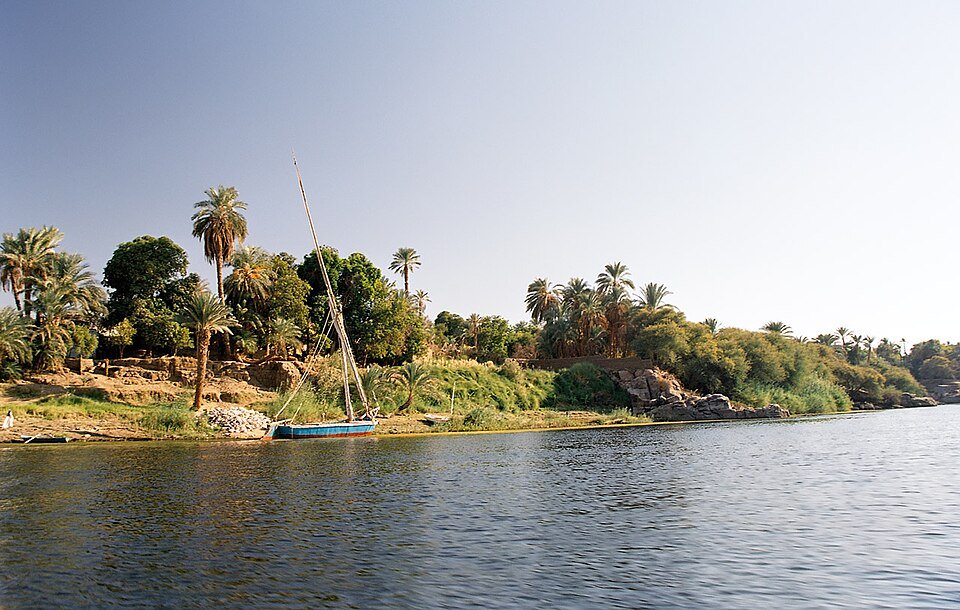
Elephantine Island is located in Southern Egypt in Aswan. It is located opposite the modern city center and can be accessed by small boats.
How to get to Elephantine Island?
You can get to Elephantine Island by boat. You can book a boat from anywhere on the Aswan quay.
What to do on Elephantine Island?
Explore temples in Elephantine Island
Prior to 1822, Elephantine Island in Egypt had various temples built to honor pharaohs, Thutmose III and Amenhotep III, which Muhammad Ali ruined during his campaign to conquer Sudan after taking charge of Egypt. These temples were preserved well prior to their demolition. The Temple of Satet was one of the earliest structures on the island and went through expansion and renovation over thousands of years. Various past records show the existence of an ancient Egyptian temple built to honor the god Khnum on the island as far back as the 3rd Dynasty. This temple went through a complete reconstruction during the 13th Dynasty, prior to the early days of the Graeco-Roman age of Egypt.
During the Ptolemaic dynasty, the ancient Greeks maintained ancient religious traditions and customs of the island, which revolved around their ancient Egyptian goddesses and gods. The southern tip of the island is generally occupied by marvelous remains and ruins of the Khnum temple, which has a Step Pyramid made of granite that originated in the 3rd Dynasty. Several local governors and officials have various dedicated shrines and statues within this temple.
Aswan museum
The Aswan Museum is located at the southern tip of the island, which shows archaeological discoveries that consist of a mummified ram of Khnum. The central areas of the island host three Nubian villages, and a luxury hotel is located at the northern tip. Additionally, the Aswan Botanical Garden is located next to el Nabatat Island on the western side.
Continuing excavations by the German Archaeological Institute have yielded various artifacts, including a mummified ram of Khnum, shown in the Aswan Museum on the island. The island has also had prehistoric Egyptian artifacts and a unique calendar known as the Elephantine Calendar of Things, dating to the reign of Thutmose III during the 18th Dynasty.
Abu Temple and nilometers
You’ll have an amazing opportunity to visit the ruins of the ancient Abu temple and the nilometers, which many of you may have already heard about. The two ancient nilometers to track the level of water of the Nile are usually water basins with marks on the wall. A high water level indicated a good harvest for the upcoming year. You can check out the ancient markings on the wall in the Roman numbers, which they used to monitor the water level.
The temple of Khnum
One of the most religious sites of the island was the temple of Khnum, built to honor the ram-headed god Khnum. While mostly foundations remain, you can walk among the massive stone columns and reconstructed gateways.
The temple of Satet
Next to Khnum’s temple are the remains of the temple for his consort, the goddess Satet. This place is incredibly old, with its earliest structures dating back to the predynastic period.
Is it worth visiting the Elephantine Island?
The short answer is yes. It would be worthwhile to visit the Elephantine island, which offers a unique combination of ancient archaeological sites, including the temple of Khnum, residential ruins, and a Nilometer. Despite this, you can also have a chance to explore the living Nubian culture, friendly locals, and traditional crafts. This combination of history and authentic cultural experience makes it different from other tourist sites. This place can be accessed easily with relatively few crowds and genuine interactions with locals, making it one of Aswan’s most rewarding places.
Make sure to plan your trip with a reliable tour operator to ensure an unforgettable trip. Discuss your requirements and places you would like to visit. Apart from Elephantine Island, there are many places in Egypt that you can visit along the Nile by booking a Dahabiya Nile Cruise Aswan to Luxor by contacting Swan Dahabiya.
How long does it take to explore Elephantine Island?
It might take 2-4 hours to explore Elephantine Island. You may spend 1-2 hours exploring archaeological sites, which may include the Aswan Museum, the nilometer, the temple of Khnum, and ancient ruins. If you want to walk through Nubian villages, it may take 1-2 hours. The crossing by boat takes 5-10 minutes each way.
Final thoughts
If you are planning your trip to Elephantine Island, make sure to create a checklist to finalise what places you’ll visit there and what activities you will perform. Make sure to keep in mind to choose a trusted tour operator for your tour. Despite this, if you are interested in exploring beautiful places in Egypt like Luxor and Aswan while enjoying the beauty of the Nile, you can book a Nile River cruise dahabiya by getting in touch with Swan Dahabiya.