


God Hapi was considered a major Egyptian God of the Nile. He was responsible for the Nile River’s flooding every year. These floods, the ancient Egyptians believed, brought fresh water and soil, which helped crops grow. This made the land fertile and helped people to live and grow. In this guide, we’ll tell you how Hapi was fertility in Egypt. The rich black soil of the Nile floods was known as Kemet or the Black Land.
Hapi was most commonly depicted as a rounded figure, possessing both male and female characteristics, representing nourishment, strength and the ability to give life. The Egyptians said he emerged out of sacred caves near Aswan and looked upon his annual flood as one of the greatest blessings from the gods.
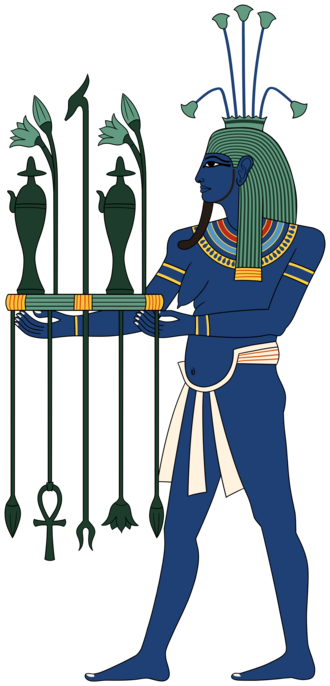
Hapi, god of the Nile
God Hapi was not a minor god. He was a god in the ancient Egyptian pantheon. Not only was he the god of the Nile River, but he was the personification of the Nile Inundation, the annual flood. These floods brought fertility, life and prosperity to Egypt. Unlike many other gods, he represented the Nile’s water and the rich black soil that it left behind after flooding. These floods helped crops grow and helped people in farming in ancient Egypt. Due to this fact, Hapi was considered a very important god and honored in religious ceremonies.
What are the origins and nature of god Hapi?
The origin of Hapi is deeply connected to the geographical reality of Egypt. He was a beloved deity, representing an important natural phenomenon that sustained the country. Unlike other gods, Egyptians did not usually relate him to a specific town or cult center. Rather, he was worshipped all over Egypt, and wherever the Nile River ran, he was there and not confined to one place. His name was called when mentioning the Nile or its flowing waters. He was also given titles such as “Lord of the Fishes and Birds of the Marshes” and “Lord of the River Bringing Vegetation” as the Nile gave Egypt plants, food and life. Unlike many other gods, Hapi was not believed to have had children or parents, suggesting that Egyptians saw him as an ancient, self-created force of nature and a source of life. His name came when it was of the Nile or its flowing water.
What were the roles and responsibilities of Hapi?
The main duty of Hapi was of the utmost importance: he was the bringer of the Nile flood each year. The ancient Egyptians did not simply see this annual flooding as a natural event, they thought it was created by the gods. The floodwaters deposited black rich soil that enabled farmers to grow crops in Egypt’s desert land. Egypt would not have survived but for the blessings of Hapi. Hapi was called the god of fertility because the yearly flooding made the land fertile and helped the farmers to grow crops. He also helped supply food for animals and people. Hapi also helped to maintain balance and order in the world, something the Egyptians called Ma’at, by bringing the floods every year. His return each year shows that the gods were happy and that life was continuing as it should.
How was god hapi depicted in ancient Egyptian art?
Artists depicted Hapi differently from other Egyptian gods. Usually he was not depicted with an animal head or mummified. Instead, he was portrayed as:
A figure with both male and female features: Hapi had large breasts and a round belly to represent fertility, nourishment and his ability to provide food and life for everyone.
Green or blue skin: These colors symbolized the water of the Nile and the green plants that grew because of its presence.
A crown of water plants: He often wore papyrus or lotus plants on his head to represent his link to the Nile and nature. Sometimes, he also carried trays filled with food and crops from the river.
Artists sometimes showed two versions of Hapi together. One represented Upper Egypt and wore papyrus plants, while the other represented Lower Egypt and wore lotus plants. Together, they symbolized the unity of Egypt and the importance of the Nile in keeping the country strong and connected.
Frequently asked questions
Who was the god of the Nile?
Hapi was the main ancient Nile god who caused the Nile to flood every year. He was thought to be the fountain of life for all the people, plants and animals around him.
Who was the Egyptian god of the Nile crocodile?
Sobek is related to the Nile Crocodile and appears as a crocodile or crocodile-headed human. He was represented as a powerful deity known for the fertility and life-giving nature of the Nile.
Which god created the Nile River?
When it comes to the Nile River the name of the god that comes is Hapi. He was the one responsible for the Nile River, more specifically for the annual flooding that brought fertility to the land. He was worshipped as the “Lord of the River Bringing Vegetation” and “Father of the Gods”.
Is the Nile River a god?
Yes, the Nile River was considered sacred and represented by the god Hapi.
Conclusion
One of the most important gods in ancient Egypt was Hapi, god of the Nile River and its fertile floods. The Egyptians believed his yearly floods gave fertile soil, helped crops grow and made life possible in the desert land of Egypt. Hapi represented prosperity and survival for the whole civilization as he was linked to fertility, nourishment and balance.
If you are interested to learn and explore such amazing facts about Egypt, you can take the best Nile River Cruise Dahabiya by contacting to Swan Dahabiya.