


Abu Simbel Sun Festival is one of the most amazing cultural events in Egypt. To witness an architectural and natural wonder, travelers from around the world visit Egypt. It takes place twice a year: first in February and second in October. The beam of the sun’s rays illuminates the inner sanctuary of the Sun temple of Ramses II at Abu Simbel, which lights up statues of the pharaoh and the gods he worshiped, while leaving the god of darkness in shadow. This breathtaking view shows not only the incredible precision of ancient Egyptian engineering but also the enduring cultural and spiritual significance of Egypt’s festivals.
What is the Abu Simbel Sun festival?
The Abu Simbel Sun festival is celebrated twice a year and takes place at the temple of Ramses II in the south of Egypt. On two days of the year, the central chamber of the temple is illuminated by the sunlight, which is normally dark. This occurs on two days of the year when the sun aligns perfectly with the temple, illuminating the statues of Ra (the sun god) and Amun (the king of the gods). However, the statue of Ptah (the god of darkness) stays in the shadows. This breathtaking event has been celebrated for over 3,200 years because of the stunning design of the temple’s architecture.
Who Constructed the Temples of Abu Simbel?
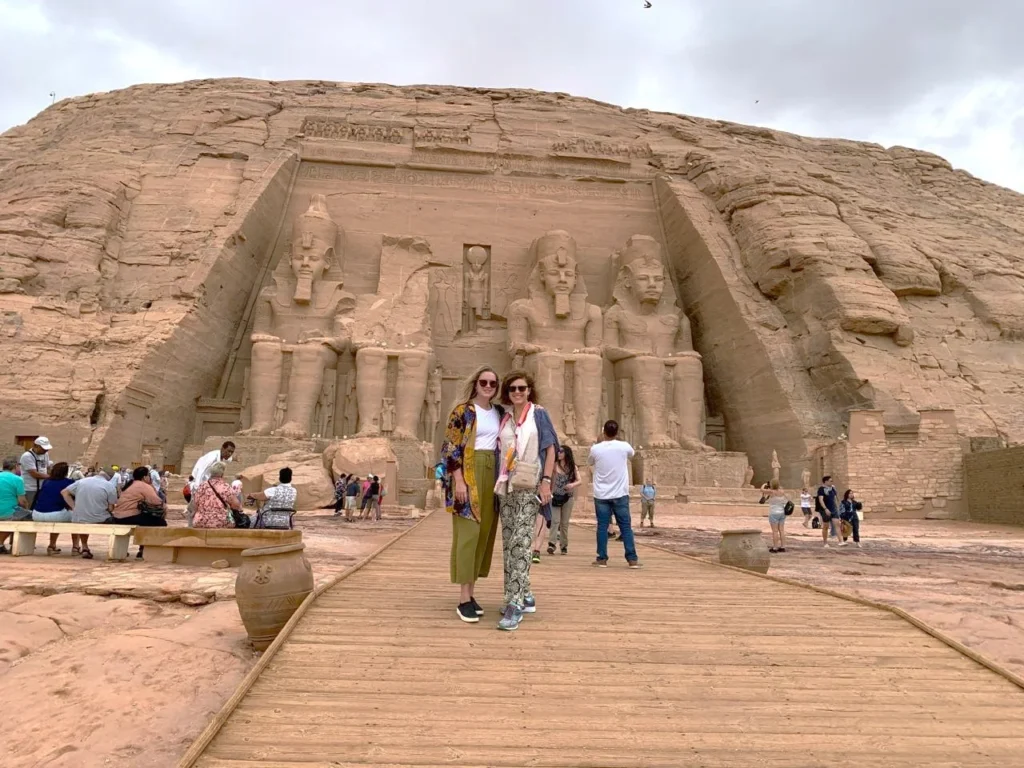
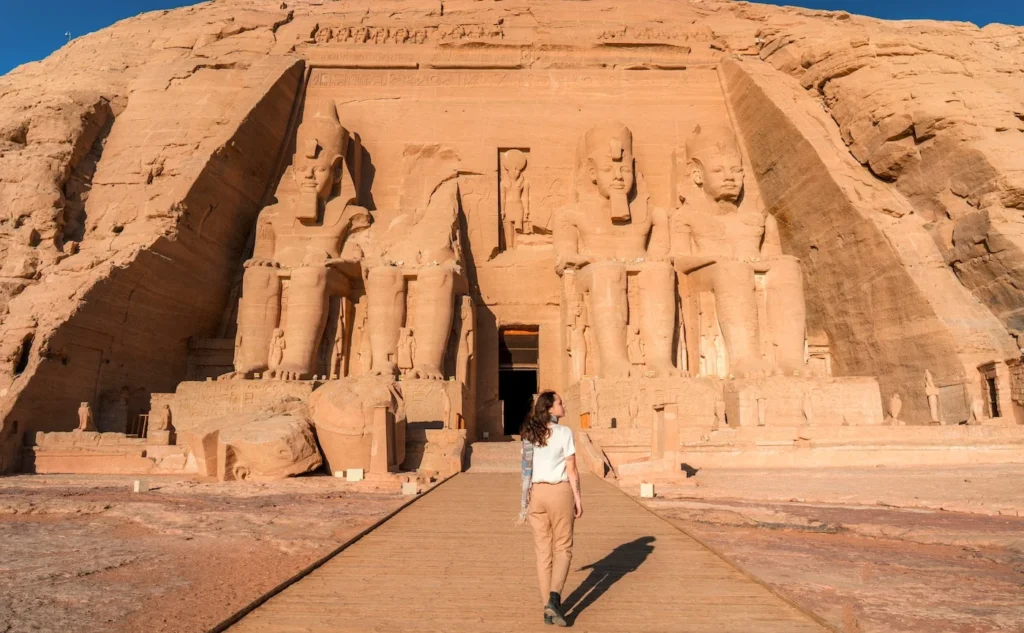
Abu Simbel is where two famous rock-cut temples are located – one for Ramses II and the other for his wife, Queen Nefertari. Ramses II constructed these temples between 1279 and 1213 BC to show his greatness and power. The temples are carved into the cliffs of sandstone and are among Egypt’s top places to visit because of their stunning design.
At the temple’s entrance, a 65-foot statue of Ramses II is built to greet visitors. Inside the temple, a 108-foot statue of him stands in the inner chamber. The temples are popular for their architectural design. The sun aligns with the temple twice a year, lighting up the central chambers on Ramses II’s birthday and the day he became king. The statues of Ramses II, Ra (the sun god), and Amun (the king of the gods) are lit up, while only Ptah, who is considered the god of darkness, stays in the shadow.
Ramses II was the third pharaoh of the 19th Dynasty. He became king after his father, Seti I, died. Ramses ruled for 66 years until he died in 1213 BC. During his ruling period, he constructed many temples, cities, and monuments, and he led successful wars. He was originally buried in the Valley of the Kings near Luxor, but his mummy is kept in the Egyptian Museum in Cairo for visitors to see.
When is the Abu Simbel Sun Festival Celebrated?
The Abu Simbel Sun festival is celebrated twice a year, on February 22nd and October 22nd. When the temple of Ramses II was first constructed, the festival was celebrated on February 21st (it’s believed that that was the day when he became the king) and October 21st (on the day of his birthday). The temple was designed so that the sunlight would shine into the central chamber on these two specific days. On all other days of the year, the central chamber would be in the darkness.
However, in the 1960s, the construction of the Aswan Dam threatened to flood the temple, so the entire Abu Simbel complex was moved 200 meters away from the rising water level. The project was very costly, costing around millions of dollars, but it saved the temple. Since the move, the Sun Festival now happens a day later than it did in Ramses II’s time.
Why Does Only Ptah Stay in the Shadows at Abu Simbel?
Ptah stays in the shadows because he is considered the god of darkness and the underworld, unlike other gods who are sun gods. The temple is designed in a way so that the sun would never shine on the deity of darkness.
When is the Best Time to Visit Abu Simbel?
If you are looking for an unforgettable experience, then you should visit Abu Simbel during the Sun Festival that takes place on February 22nd and October 22nd. Early morning visits allow you to enjoy cooler temperatures, enjoy the best view, and witness solar alignment firsthand. To avoid extreme heat, visiting in the cooler winter season (November – March) would be recommended.
Is Abu Simbel Worth Visiting Outside of the Sun Festival?
Yes. If you can’t visit Abu Simbel for the Sun Festival, you can visit this place outside of the Sun Festival because it is among the most stunning sites in Egypt.
Final thoughts
If you attend the Abu Simbel Sun festival, you’ll see something incredible. You can also book your trip on the Nile River cruise dahabiya with Swan Dahabiya. Contact us today for more information.