


Table of Contents
-
Quick Overview
-
Best Light for Photography on an Aswan–Luxor Dahabiya Journey
-
Why is the Dahabiya deck a good place for Nile photography?
-
Photographing Hidden Nile Temples and Riverbank Views
-
Mornings and Which Way to Look for the Best River Views
-
How to capture morning views over the Nile?
-
Major Stops Along the Route
-
Photography Permit Egypt: What Travellers Need to Know
-
Permits and Fees for Photography in Egypt
-
Drone Rules in Egypt for Tourists: Can you fly a drone from a Dahabiya?
-
Conclusion
Quick Overview
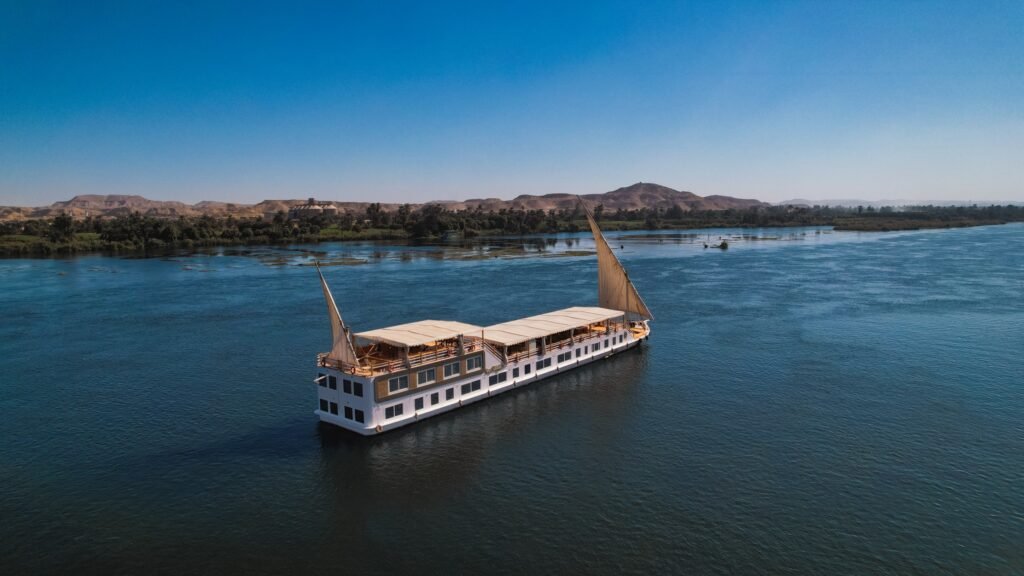
A Nile journey on a Dahabiya gives you many opportunities to capture beyond the famous temples, as the vessel moves between Aswan and Luxor, where scenery keeps on changing. Like you may see plam-lined riverbanks, small villages, farmland, desert landscapes, and other boats. Also, the open deck of the dahabiya makes it easy to watch these views as you sail.
You can also capture ancient sites from a different angle, especially when the river brings you close to places such as Kom Ombo and Edfu, and the slower pace of a Dahabiya Nile cruise means you can spend more time enjoying the scenery instead of rushing between sightseeing stops.
For travellers interested in Nile cruise photography tips, here is a quick sneak peek: the most important part is knowing when the light is best, understanding what you can photograph at monuments, and knowing the rules for capturing ancient monuments can ensure that you capture the best of the Nile River and Egypt.
Best Light for Photography on an Aswan–Luxor Dahabiya Journey
The Nile landscape looks different throughout the day, so the time of your sailing can make a big difference to your photographs. Like the early morning, it often brings softer light over the river, making it a good time to photograph the calm water, palm trees, boats, river villages, and, at some parts, the desert on the horizon.
The late afternoon is another good period for photography as the stronger daytime light starts to soften, and around sunset, the western side of the Nile can become especially attractive as the light falls over the desert and West Bank landscapes.
Well, the golden hour changes throughout the year, so there is no single time that applies to every Dahabiya journey. If you are traveling in the winter, the sunset views can feel calmer due to the cool atmosphere. We understand that a lot of travelers choose the luxury Dahabiya Nile cruise to witness nature’s beauty from the Dahabiya decks. There is no doubt that Egypt is a treasure for photographers; every angle offers you a unique backdrop.
Why is the Dahabiya deck a good place for Nile photography?
- One of the simplest places to enjoy photography during a Dahabiya journey is the deck.
- You can stay outside while the landscape moves slowly around you.
- The view from the deck changes continuously, so there is no need to wait for a famous attraction.
- A wide view of the Nile can show several parts of the landscape in one frame, like river water, green farmland, palm trees, desert, small boats, and villages.
- Morning on the deck can be especially peaceful when the river is quiet.
- During the afternoon, the changing position of the sun can create different views of the riverbanks.
- At sunset, the deck can become a natural viewing point for the changing colors over the Nile and desert.
For all these reasons the decks of the boutique vessel, the traditional Dahabiyas, are considered a good place for photography. Whose deck offer is better for me: a spacious one for photographs, large cruises, or Dahabiyas? Well, both decks offer mostly the same views if sailing at the same time; here the difference can be in pace and onboard atmosphere.
Decks of a Dahabiya will have fewer guests due to less capacity, and it offers a peaceful atmosphere onboard with a slow pace of sailing. While the large cruises have more guest capacity, which results in crowds at the deck and a constant sailing pace. That’s the major difference you may witness on decks of Dahabiya and large cruises.
Photographing Hidden Nile Temples and Riverbank Views
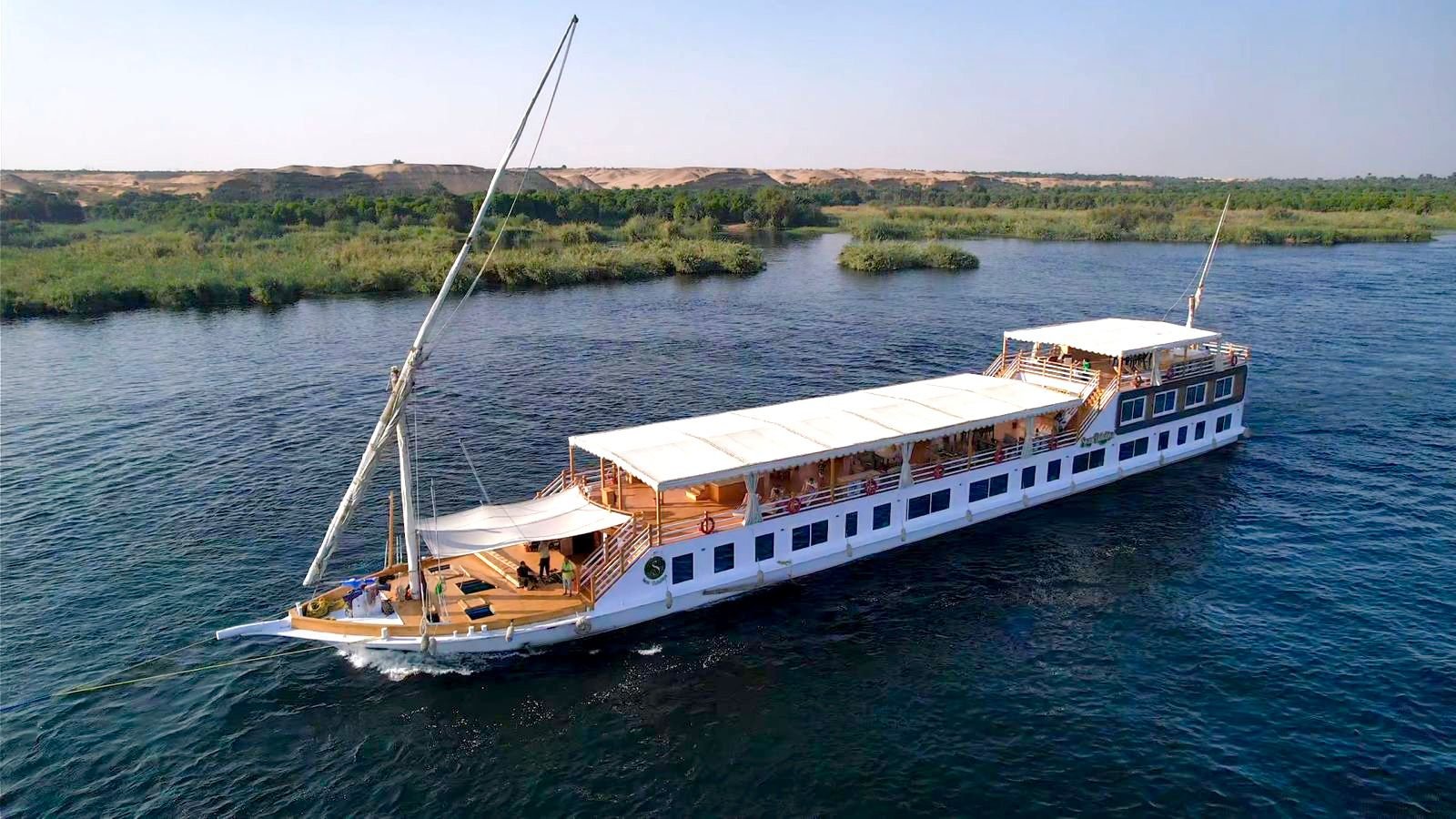
The Aswan to Luxor route is not only about the major attractions printed in every guidebook, but the travelers on board can also see a different side of the Nile Valley. One not only gets to visit the major and big archaeological sites, but the boutique smaller vessels also stop at hidden Nile temples and small ancient sites like Gebel el Silsila and El Kab tombs, with stops near famous villages and islands that you pass by while sailing the legendary river the Nile in Egypt.
So, photographers can get a chance to capture the serene riverbanks. Well, this makes the photography experience less predictable in a good way, as in every few hours the river scenery shifts, so for photographs sailing actually feels like a task to not miss out on capturing any monument. The exact views depend on the sailing route, water level, stopping points, and itinerary.
Mornings and Which Way to Look for the Best River Views
Well, there is no single permanent “best facing” morning for every Dahabiya stop; a traditional Dahabiya can stop at different locations depending on the itinerary and sailing conditions, as the direction of the boat and the position of the riverbank can change the scenery.
The most useful camera placement for photographers around the sunrise is facing cameras towards the east, and for sunset views, the cameras at the west can be beneficial for the best captures. Simply do not ask the crew, “Which side is best?” Instead, ask these few questions if your focus is photographing during the Nile journey.
- Which side of the boat will face the riverbank?
- Will we remain here during sunset?
- Will the boat move before sunrise?
- Is there an open view from the deck?
Asking these questions will give you an insight into what opportunities you can get to capture the Nile riverbanks that depict the rich nature’s diversity in Egypt.
How to capture morning views over the Nile?
| View/Morning Position | What you may photograph |
| East-facing view | Sunrise over the Nile and eastern bank. |
| West-facing view | Sunset, desert hills, and warm evening light. |
| Open river view | Wide Nile landscapes and passing boats. |
| Green riverbank | Palm trees, farmland, and village scenes. |
| Near archaeological sites | Temple silhouettes and riverside landscapes. |
| Quiet overnight morning | Low-light river and evening deck scenes |
The position and views can be different depending upon the direction of the Dahabiya Nile cruise from Aswan to Luxor; this is just a quick directional guide for photography enthusiasts to offer an insight that you can have mesmerized views during the complete journey.
Major Stops Along the Route
Philae Temple: Near Aswan, Philae offers photographs where ancient architecture meets the surrounding water and island landscape.
Kom Ombo: Its location close to the Nile makes it a natural subject for photographs connected to the river journey.
Edfu: The large temple complex gives you a chance to move from wide river landscapes to detailed photographs of ancient architecture.
Esna: This quieter historical stop adds another layer to the journey before reaching Luxor.
Luxor: The journey opens into some of Egypt’s best-known historical landscapes, including Karnak Temple, Luxor Temple, the Valley of the Kings, and the West Bank.
The important point is that the photography experience does not begin and end at a temple, but the river between these destinations is part of the story that combines the historical monumental photography with soulful river photography.
Photography Permit Egypt: What Travellers Need to Know
- Egypt’s current tourism guidance allows personal, non-commercial photography and video in public places, including archaeological sites and museums, without a permit and free of charge, subject to restrictions.
- Indoor flash photography is not allowed in museums and indoor archaeological areas.
- Photography of children is prohibited.
- Egyptian citizens should not be photographed without their permission.
- Professional photography equipment is required to have additional permission to be used to capture.
- Equipment such as professional photography umbrellas, outdoor artificial lighting, and equipment that occupies or blocks public roads requires special permission.
- Commercial photography and filming at archaeological sites also requires the separate permits and fees.
Permits and Fees for Photography in Egypt
| Photography Type | Permits and fees |
| Personal phone photography | Free; no permit required |
| Personal camera photography | Free for non-commercial use, subject to site and museum rules |
| Commercial photography | Permit and applicable fees required |
| Professional production/filming | Prior approval and applicable fees are required. |
| Drone photography | Separate government permission required |
Drone Rules in Egypt for Tourists: Can you fly a drone from a Dahabiya?
Drones are restricted in Egypt, so tourists should not bring or operate a drone in Egypt without prior government permission, and Egypt’s current travel guidance states that drones should not be imported, used, or produced in Egypt without permission from the Egyptian Ministry of Defence.
- Travellers are generally not allowed to bring drones into Egypt. Drones may be taken by airport authorities during security and customs checks.
- Therefore, it is recommended that travellers do not bring expensive drone equipment to Egypt.
- You can carry a professional camera to capture the beauty of Egypt’s monuments, temples, Nile landscapes, and nature.
Conclusion
A Dahabiya offers a slower way to experience the Nile, which naturally creates more time to observe the surroundings, as their deck provides an open place to watch the river while sailing. So, keep your camera ready for the changing riverbanks, boats, villages, and desert views, and at monuments, follow the photography rules and respect restricted areas. With the right expectations and preparation, your photographs can show not just where you travelled, but what the Nile journey actually felt like.