


Amenhotep III was the ninth pharaoh of the 18th dynasty. He ruled Egypt from 1391 to 1353 BC or 1388 to 1351 BC. He was born to Thutmose IV and Mutemwiya, a secondary wife of the king. During his reign, Egypt reached the height of its artistic and international influence. He was succeeded by his son, Amenhotep IV (Akhenaten). He conducted one known campaign in Nubia, which helped to secure Egypt’s trade routes and southern border. His reign is also known as the period of peace, wealth, and artistic growth.
Table of Contents:
-
Overview
-
Amenhotep III’s Early Life
-
Amenhotep III’s Achievements
-
What Did Amenhotep III Look Like?
-
Amenhotep III Family Tree
-
The Golden Age of Amenhotep
-
Amenhotep III and the Valley of the Kings
-
Amenhotep III’s Mummy
-
How did Amenhotep III Die
-
Amenhotep III and Akhenaten
-
Interesting Facts About Amenhotep III
-
Explore the Valley of Kings with Swan Dahabiya
-
FAQs
-
Conclusion
Overview
This quick overview will help you to understand Amenhotep III’s life, family, and children.
| Facts | Information |
| Name | Amenhotep III |
| Dynasty | 18th |
| Period | 1391 to 1353 BC or 1388 to 1351 BC |
| Father | Thutmose IV |
| Mother | Mutemwiya |
| Predecessor | Thutmose IV |
| Successor | Akhenaten (Amenhotep IV) |
| Known children | Thutmose, Amenhotep IV (Akhenaten), Sitamun, Iset, Henuttaneb, and Nebetah. |
| Died | Around 1353 BC |
Amenhotep III’s Early Life
Amenhotep III was the son of Thutmose IV and his secondary wife, Mutemwiya. He was crowned at a very young age; it is believed that he became pharaoh at roughly 12 years old. After becoming king, Amenhotep III married Tiye, who became one of the most influential queens in Egyptian history; she had a strong influence on political decisions and even played an important role during the reign of his son. Together, they strengthened Egypt’s royal family and helped guide the kingdom into a period of great prosperity.
Amenhotep III’s Achievements
Amenhotep III was one of the great pharaohs of the 18th dynasty; he was well known because of his various achievements, and some of them are mentioned below:
Diplomacy and Alliance
He avoided major wars and chose to use diplomacy to strengthen Egypt’s relations with other kingdoms.
Expanding Trade
During his reign, Egypt’s economy flourished as the country received gold, wood, and precious stones from other nations, which helped Egypt to become richer and more powerful.
Monuments
He constructed many architectural monuments, including the Colossi of Memnon, the Malkata Palace complex, and the Temple of Soleb. He also expanded some temples, including Luxor and Karnak.
Art and Culture
During his period, many artists created statues, jewelry, paintings, and carvings, and these artworks are known for their beauty and realistic style; this is one of the major reasons why his reign is known as the golden period of Egypt.
What Did Amenhotep III Look Like?
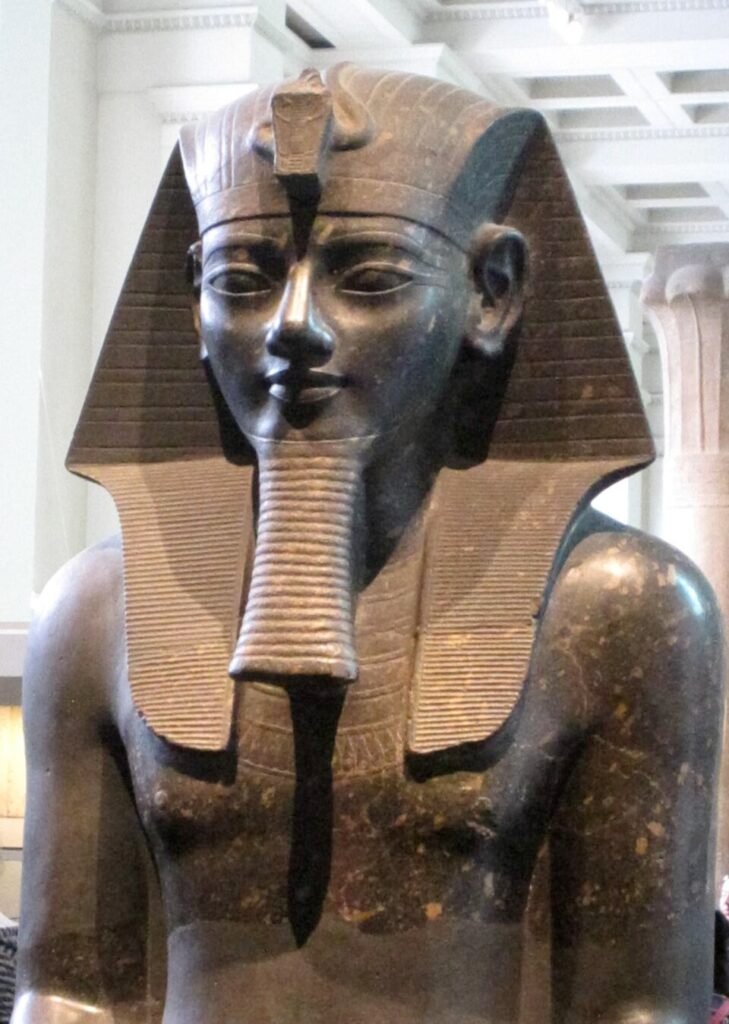
In his official art it was depicted that he had a round face, almond-shaped eyes, and a full mouth, but analysis of his mummy shows that he was short and he suffered from health problems later in life. His surviving statues show that he had a plump face, unblemished skin, and arched eyebrows. He is frequently shown wearing traditional royal headdresses that represent his position as pharaoh. His remains show signs of illness and age, which gives ideas about what he may have looked like.
Amenhotep III Family Tree
Amenhotep III was the ninth pharaoh, and he was born to Thutmose IV and Mutemwiya. Queen Tiye was his royal wife, and she was the daughter of Egyptian nobles Yuya and Thuya. He was also married to several foreign princesses, including daughters of the kings of Babylon, as part of diplomatic alliances. His well-known children include Thutmose, Amenhotep IV (Akhenaten), Sitamun, Henuttaneb, Iset, and Nebetah. He was succeeded by his son Akhenaten (Amenhotep)
The Golden Age of Amenhotep
The period of Amenhotep III was called the period of peace and prosperity because, after the military campaign in Nubia, he didn’t fight any major war. To keep his border safe, he used diplomacy and royal marriages.
- During his reign, he increased trade with other countries, which helped to bring valuable goods to Egypt.
- He used diplomacy and marriage to create strong friendships with neighboring kingdoms.
- He built many impressive monuments and temples, such as the Colossi of Memnon and the Malkata Palace.
- Even the art during his reign became highly detailed and realistic.
- During his fifth year, he led a military campaign to Nubia and secured the southern border and trade routes.
Amenhotep III and the Valley of the Kings
Amenhotep III’s tomb is known as WV22, and it is present in the Western Valley, which is a part of the Valley of the Kings. Unlike some other royal tombs, which are located in the main eastern valley, his tomb is located in the Western Valley.
Amenhotep III’s Mummy
However, Amenhotep III’s mummy was buried in tomb WV22 in the Valley of the Kings, but later on, to protect it from tomb robbers, it was moved inside the royal cache of tomb KV35. It was discovered centuries later and is now preserved in Cairo. The analysis of his mummy shows that he suffered from arthritis, age-related health problems, and several dental diseases.
How did Amenhotep III Die
After ruling for about 38 years, Amenhotep III died around 1353 BC, after ruling Egypt for almost four decades. His death is marked as the end of one of the most successful periods of the 18th dynasty. Examination of his mummy suggests that during his last years, he suffered from various health problems, such as dental issues and arthritis. However, the exact cause of his death is still unknown, but many historians believe that his death was natural due to illness and health-related issues. His son, Akhenaten, also known as Amenhotep IV, became the next pharaoh.
Amenhotep III and Akhenaten
Amenhotep III and his son Akhenaten are considered the most influential pharaohs of the 18th dynasty. However, Amenhotep III ruled during peace and international influence, whereas Akhenaten became famous for introducing some major religious reforms that transformed Egyptian society.
The original name of Akhenaten was Amenhotep IV; he succeeded his father, Amenhotep III, after his death around 1353 BC. It is believed that Amenhotep IV changed his name to honor the sun god Aten. The prosperity, diplomatic alliances, and monumental building projects established during Amenhotep III’s reign gave Akhenaten the resources to found a new capital city, Akhetaten (modern Amarna), and pursue his religious reforms.
However, Amenhotep III was remembered for his artistic achievements and strengthening international diplomacy, whereas Akhenaten was popularly remembered as a revolutionary ruler whose religious changes reshaped Egyptian history.
Interesting Facts About Amenhotep III
- He was the son of Thutmose IV.
- His period is considered the golden age of peace, wealth, and architecture.
- He ruled Egypt for approximately 38 years.
- He became pharaoh at a very young age.
- He fought only one minor military campaign in Nubia.
- He built the Colossi of Memnon and the Malkata Palace.
- He was the father of Akhenaten (Amenhotep IV) and the grandfather of Tutankhamun.
- It is believed that he became the first pharaoh to issue royal news bulletins (to share information about his marriage and building projects).
- He has the most surviving statues, as there are over 250 statues of him that survive from this reign.
Explore the Valley of Kings with Swan Dahabiya
If you want to explore the legacy of Amenhotep III, then you can book our cruise. While sailing between Aswan and Luxor, you will get the chance to explore all the ancient monuments, including the Colossi of Memnon. We offer guided tour excursions that are led by local Egyptians, and while traveling with them, you will get a deeper understanding of the pharaoh whose reign is marked as the golden age of Egypt.
Whether you are passionate about ancient history or just want to visit Egypt for the first time, a Swan Dahabiya team will let you experience the monuments that have fascinated travelers for thousands of years.
FAQs
Was Akhenaten a son of Amenhotep III?
Yes, Akhenaten was the son of Amenhotep III and Queen Tiye, and his original name was Amenhotep IV. He is known for his religious reforms.
Who succeeded Amenhotep III?
His son, named Akhenaten (originally named Amenhotep IV), succeeded Amenhotep III.
Why was the reign of Amenhotep III called the golden age?
The period of Amenhotep III was called the golden age due to various reasons, including his artistic achievements, diplomacy, and monumental construction. Moreover, during his reign, Egypt reached the heights of wealth. His peaceful foreign policy also helped Egypt to become one of the most powerful kingdoms of ancient Egypt.
Was Tutankhamun related to Amenhotep III?
Yes, Amenhotep III was Tutankhamun’s grandfather. Tutankhamun was the son of Pharaoh Akhenaten.
How did Amenhotep III die?
Amenhotep III died around 1353 BC; it is believed that he died because of natural causes. His mummy shows signs of age-related health issues, including dental disease and arthritis.
What was Amenhotep III known for?
His period is known as the golden age of Egypt because during his period Egypt was at the height of wealth, artistic achievements, diplomacy, and monumental construction.
How old was Amenhotep III when he died?
It is believed that Amenhotep III was around 45 to 50 years old when he died. After ruling Egypt for almost 38 years, he died around 1353 BC.
Conclusion
Amenhotep III is one of the notable pharaohs of Egypt; he was the ninth pharaoh of Egypt’s 18th dynasty, and he ruled Egypt from 1391 to 1353 BC or 1388 to 1351 BC. Some historians believe that he was just 12 years old when he became king. He is popularly known because of his architectural achievements, diplomacy, and monumental construction.
Even now, you can explore the legacy of Amenhotep III along the Nile River. If you want to explore all the major monuments and temples between Aswan and Luxor, then you can contact our team at Swan Dahabiya Luxury Nile Cruise, and they will recommend the best cruise as per your travel needs. You can even check our guests’ reviews on TripAdvisor and Google Reviews; it will help you learn about the experiences of travelers who have explored Egypt with us.