


Temple of Horus in Edfu: History, Facts, Timings, and Tours
Table of Contents
Introduction
Where is the Temple of Horus located on the Nile riverbanks?
When was the Temple of Horus built?
Where is the Temple of Horus, and in which period was it constructed?
When was the Temple of Horus discovered?
What was the Temple of Horus used for?
What do the four sons of Horus represent?
How to get Edfu Temple of Horus tickets?
Edfu Temple Timings
4 Things to Keep in Mind while Exploring the Temple of Horus
Conclusion
Introduction
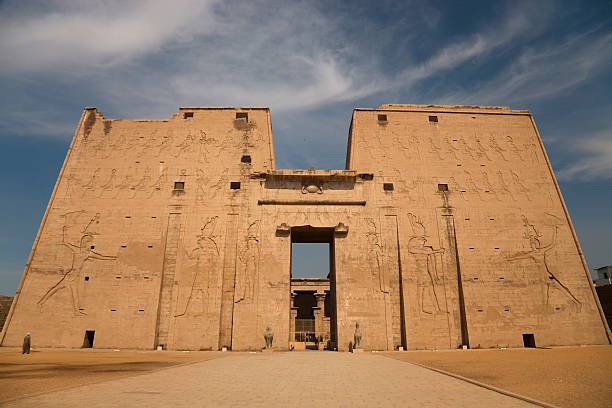
The Temple of Horus at Edfu is the second-largest ancient temple in Egypt after the Karnak temple complex in Luxor. It is a common visit to a temple on a dahabiya cruise itinerary in Egypt on the guided tour packages. The temple has a great history, constructed during the Ptolemaic period in Egyptian history, and was dedicated to the falcon-bird deity, Horus the Elder.
With this blog you will be knowing about “Why is the Temple of Horus important?” in Egyptian mythology and about the sons of God Horus. By the end you will have practical travel tips and insights about entrance ticket costings and timings for exploration. Read the full article to learn about the unknown facts about the temple at Edfu.
Where is the Temple of Horus located on the Nile riverbanks?
The Temple of Horus in Egypt is located in Edfu, a city in the Upper Egypt region on the west banks of the river Nile, explored widely during the river-cruising tours. Edfu, the ancient city, was also known as Apollinopolis Magna in the Greco-Roman period in the Egyptian historical timeline. It is located roughly between Luxor and Aswan, making it a common stop for two-masted sailing boat tours.
When was the Temple of Horus built?
The temple of Horus in Edfu was built in 237 BC and completed around 207 BC. Built in order to honor the falcon-headed god, Horus the elder. It is one of the well-preserved monuments from the Egyptian monuments. Majorly, the temple is the core religious center of Horus of Behedet, simply meaning “Horus the Elder.” With him, the goddess Hathor of Dendera and their son Harsomtus were once worshipped here with sacred Egyptian rituals.
Where is the Temple of Horus, and in which period was it constructed?
The Temple of Horus in Edfu was built over an 180-year period during the Ptolemaic Kingdom period in Egypt. Construction of the temple began under Ptolemy III Euergetes, with main sanctuary building work was completed by 207 BC. Then the final touches in the temple were added till 57 BC under the rule of Ptolemy XII Auletes with the installation of the entrance doors.
When was the Temple of Horus discovered?
The temple of Edfu, dedicated to the god Horus the Elder, was buried by sand and silt of around 12 meters till the 18th century, with the homes of local people on it. First in a French expedition, the temple was identified in 1798. Then in 1860, the French Egyptologist Auguste Mariette uncovered the site.
It’s a site that is naturally preserved by nature; the massive sand and slit coverage have preserved the carvings. Due to the temple being buried in sand, today it offers exclusive exploration to the tourists on luxury Dahabiya Nile Cruise tours. Visitors that explore the temple on the traditional boat sailing get included guided tours and transfers in air-conditioned cabs in the packages.
What was the Temple of Horus used for?
The temple in Edfu is the cult center of Horus, which is used to worship the falcon deity that represents kingship and protection. It was a major historical site and served as a sacred place for daily rituals that included the sacrifices and hymns. During the Ptolemaic period an annual celebration also gets conducted at the temple, which celebrates the victory of Horus the Elder over the chaos god Set, who has attempted to kill Horus’s father, God Osiris.
What do the four sons of Horus represent?
God Horus has four sons: Imsety, Hapy, Duamutef, and Qebehsenuef. His sons are the Egyptian funerary deities, represented in the canopic jars; their major roles are to protect the parts of the body and guard the body of the dead, and they believe that they rule four cardinal points: north, south, east, and west.
Imsety: He is a human-headed god, protects the liver, controls the south cardinal point, and was protected by the goddess Isis.
Hapy: He is a baboon-headed god who protects the lungs and controls the north cardinal point. The goddess Nephthys protects him.
Duamutef: He is a jackal-headed god, protects the stomach, and strongly controls the east as a cardinal point and is protected by the goddess Neith.
Qebehsenuef: He is a falcon-headed god that protects the intestines and symbolizes the west cardinal point; he gets protection from the goddess Serket.
How to get Edfu Temple of Horus tickets?
The entrance ticket to the Temple of Edfu is available on-site. For adult foreigners the ticket is approximately 550 EGP; the students with valid IDs get a 50% discount, and the ticket costs around 275 EGP for foreign students. Tourists require a passport and valid photo ID to get the ticket. Visitors exploring the temple on the Dahabiya Nile Cruise from Aswan to Luxor get tickets included in premium packages and also group guided tours.
Edfu Temple Timings
The regular opening hours of the temple are from 06:00 AM to 05:00 PM and sometimes 06:00 PM depending upon the crowd.
Winter timings (November to April): 06:00 AM to 04:00 PM or 05:00 PM.
Summer timings (May to October): 06:00 AM to 06:00 PM.
Last tickets are only available till 04:00 PM.
4 Things to Keep in Mind while Exploring the Temple of Horus
The crowds are usually larger between 09:00 AM and 03:00 PM, as a lot of tourists visit here and prefer visiting before or after these hours.
The best times to explore the temple while on a Dahabiya Nile cruise in Egypt are early morning or in the evening hours to have the picturesque background views in the pictures.
Plan a visit for about 1-2 hours to explore the temple comfortably without any rush. You can also enjoy a horse-drawn carriage in Edfu, a traditional royal experience of Egyptian civilization.
The nearby Edfu Corniche is open 24/7; during your visit, have a walk early in the morning, or if you have time, do visit.
Conclusion
The exploration experience of the Edfu temple is a rare opportunity for the tourists to learn about ancient Ptolemaic religion in Egypt. From carvings on the walls to the falcon-bird statues at the Edfu Temple, all depict the architectural intelligence of the Egyptians. Explore it while on a Dahabiya cruise sailing experience as a major shore excursion.