


Temple of Kom Ombo: A Comprehensive Travel Guide
Table of Contents
-
Introduction
-
Historical significance of the Kom Ombo temple
-
Where to get Temple of Kom Ombo tickets?
-
Temple of Kom Ombo Entrance Fee
-
Temple of Kom Ombo Opening Hours
-
Why was the Temple of Kom Ombo built?
-
Where is the Temple of Kom Ombo located on riverbanks?
-
Who built the temple of Kom Ombo?
-
Conclusion
Introduction
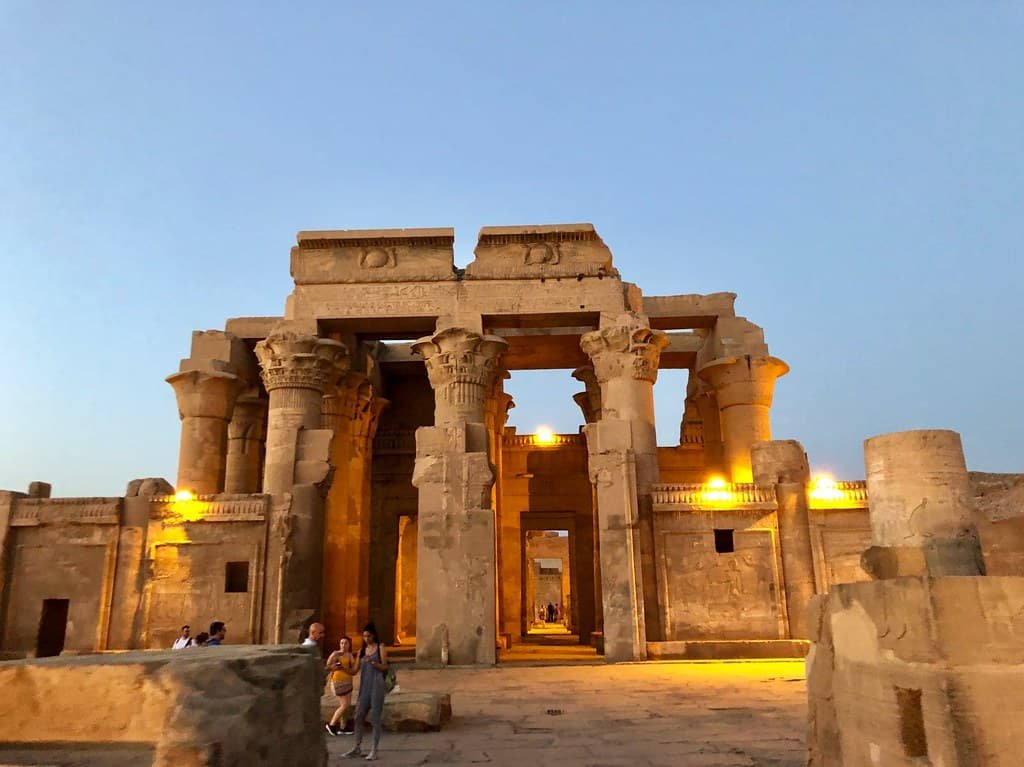
On the riverbanks of the Nile near Aswan, a unique temple of Kom Ombo is constructed during the Ptolemaic period in Egypt. Widely known for the dual god temple of god Horus and god Sobek. Over the several centuries, the temple of Kom Ombo has preserved the lesser-known culture of ancient Egypt. In this blog we are mentioning the historic Crocodile God temple with some tips and entrance costs that as a traveler you must know.
A lot of times travelers ask us, “Why is the Temple of Kom Ombo important?” The answer is it is the only dual-god temple, which is dedicated to two deities who have polarity-different characteristics. The carvings of the temple are so unique and sacred that you may not find them anywhere else in Egypt. Understand the monumental importance and history of the Temple of Kom Ombo classified below in simple words.
Historical significance of the Kom Ombo temple
The symmetrical “double god” temple located on the banks of the longest flowing river was built during the Ptolemaic age in ancient Egyptian history. The temple is divided into two parts; the double design means that courts, halls, and sanctuaries are duplicated and look alike.
Southern part of the Kom Ombo temple: it is the section of the religious place that is dedicated to the crocodile god Sobek, believed to be the controller of the Nile and also to have a crocodile head. With him the part is also sacred to the goddesses Hathor and Khonsu.
Northern part of the Kom Ombo temple: This specific section of the monument is dedicated to Horus the Elder, a falcon-headed deity believed to symbolize power, sky, and kingship. Along with them, Tefnut, the good sister, and Panebtawy, the lord of two lands, have ruled here.
It is symmetrical from the main axis point, which also states the complex nature of the temple of Kom Ombo’s architecture of the Ptolemaic age. The other things as a traveler that you should know are mentioned below.
Where to get Temple of Kom Ombo tickets?
The tickets for the Temple of Kom Ombo are available at the on-site booth at the entrance gate in Nagoa Ash Shatb, near Aswan in Egypt. In most of the cases, if you are exploring the temple on a Dahabiya cruise package, the ticket comes pre-included, which also includes a guided tour of the monument. The preferred option is also that visitors visit while on a luxury Dahabiya Nile Cruise journey on the Nile for fulfilling experiences.
Temple of Kom Ombo Entrance Fee
Costing for foreigners for exploration in Egypt
For adults: 450 EGP
For Students with valid student IDs: 225 EGP
Children below the age of 6 are allowed free entry
Mobile photography of the temple is free of costs; professional photography with a high-end camera may have additional charges.
Temple of Kom Ombo Opening Hours
The Temple of Kom Ombo, dedicated to Sobek, the crocodile god, is open all days of the year with the same timings on festive months and different seasons.
Summer working hours: 07:00 AM to last entry at 08:00 PM
In winters working hours: 07:00 AM to last entry at 08:00 PM
Ramdam festive month working hours: 07:00 AM to last entry at 08:00 PM
Why was the Temple of Kom Ombo built?
The temple is built to honor the god Sobek, associated with fertility and protection, and also for the falcon god Haroeris, commonly known as Horus the Elder. It has dual halls, sanctuaries, and shrines. Additionally, a crocodile museum is also there to honor the Nile crocodiles and the ancient Egyptian god Sobek.
Where is the Temple of Kom Ombo located on riverbanks?
The ancient temple of Kom Ombo is located on the east riverbanks within the governorate of Aswan in Upper Egypt; it is around 40-50 km north from Aswan. Easily accessible by the best Dahabiya Nile cruise in Egypt, it is known for Temple of Kom Ombo facts as a double-design temple from the Ptolemaic age, built by the trained architects of that era, and is one of the best-preserved temples in Egypt that reflects the unique history and culture.
Who built the temple of Kom Ombo?
The temple was built from 180 BC to 47 BC. The initial construction was started by VI Philometor, and then Ptolemy XII and Roman emperors like Tiberius have contributed to the construction of hypostyle halls. Then the decorative exterior walls were built by Augustus. So overall the temple reflects Greek-Roman architecture. Features like the nilometer, which is used to measure the level of the River Nile, are significant parts that attract the visitors for exploration.
Conclusion
Temple of Kom Ombo Interesting Facts includes a lot of extraordinary architectural things that are less seen in Aswan’s monuments. It symbolizes the balance, duality, and cultural fusion in ancient Egypt, so ensure, during your 5-star small boat Nile cruise ride, you surely pay a visit to the Kom Ombo temple. Its historical context makes it a must-visit monument for travelers interested in knowing about ancient civilizations.