


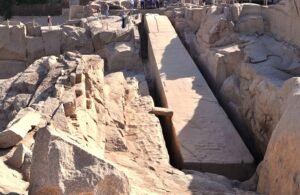
Ancient Egypt is a quest of ancient monuments and architectural secrets that are still getting studied in depth to understand the history better. Obelisks are one of the major parts of the architectural setting, which is commonly found in the historical monuments. So, the Unfinished Obelisk is a monument that is not completed, found in the granite quarry in Aswan, Egypt.
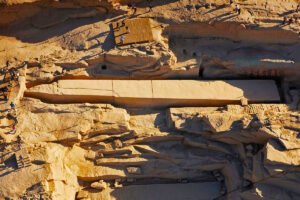
The fact that makes it unique is that it is still found in the same bedrock where it is being carved. It was discovered in the early 20th century, after being buried under sand in the quarry. If this obelisk was finished, then it may be the largest obelisk ever made, which is about 41.7-42 meters tall.
The sayings and research say that the work of carving the obelisk was left abandoned because of a large crack in it. The surface of the obelisk marks a prominent way to research about tools used by ancient architects. Tool marks and chisel work depict use of stoneworking techniques.
This site in Egypt is protected by the UNESCO World Heritage, under Nubian monuments, to preserve the unique culture and heritage of Egyptians.
History—Unfinished Obelisk
The Unfinished Obelisk Aswan carving began in the New Kingdom of Egypt, likely during the reign of Queen Hatshepsut during 1473–1458 BC. Obelisks were major royal commissions and symbols of divine power for Egyptian kings and queens, and it was intended for a temple, possibly the Karnak Temple, as it was expanded during the New Kingdom period in Egypt.
It was carved directly from the bedrock instead of having its parts quarried separately. Ancient records show these quarries were used for many significant monuments in Egypt. The quarry in Aswan was a major source for red granite used across Egypt in temples and statues. The unfinished work of carving today stands as proof or as a testament of the ancient Egyptian engineering practices.
Where is the Unfinished Obelisk located?
The Unfinished Obelisk lies in the Northern Quarries of Aswan on the east bank of the Nile.
Aswan Quarry is in the southern part of Egypt, known for its high-quality pink and red granite and large quarry area, which was a major quarrying center for ancient Egyptian stone.
Today also the site is accessed through a series of quarry paths that were made by the ancient workers who carved stone. It’s about 1 km east of the Nile, near modern-day Aswan town limits. The Northern Quarries are part of a larger ancient Aswan quarry landscape visible throughout the region, and surrounding marks reflect centuries of stone extraction activity.
Why is it an Egyptian tourist spot?
There is a number of researches being carried out and still ongoing about the ancient engineering architect practices that were able to make buildings that are still standing from centuries ago. Like which carving techniques are used for stones, how it shaped the whole process, and how the stones are too heavy and how they were shipped. The hieroglyphic language is directly carved into the stone, showing how these things were done.
Learn about:- Complete visitor and history guide of the unfinished obelisk in Aswan
So, the unfinished tourist spot is important to know that Egyptians have great mastery in monumental architecture. The engineers of that time were so thoughtful that after noticing the crack, the obelisk was stopped halfway. It also helps historians understand the ambitions of Egyptian rulers, that they planned out the largest obelisk of all time and tried to build it. Below, some facts are mentioned about the Unfinished Obelisk, which makes it a hotspot location for Dahabiya Nile Cruise passengers while they are exploring the other attractions also.
Entrance Fee and Opening Times
The Unfinished Obelisk is open daily from 7:00 AM to 4:00 PM. It is best to allow at least 30–60 minutes to explore the Unfinished Obelisk up close.
Current official entrance fees are
| Visitor’s Category | Fee |
| Foreign adults | EGP 220 |
| Foreign students | EGP 110 |
| Egyptian adults | EGP 20 |
| Egyptian students | EGP 10 |
Tickets are required to enter the archaeological site, and student visitors should carry valid student identification to qualify for the reduced rate.
If you are planning to visit Egypt in summer, then it is recommended to visit early in the morning. The site is largely outdoors, so visitors should bring water and use sun protection.
Note: Ticket prices and opening hours can change, so check the latest official information before visiting.
Can You See It From a Dahabiya Nile Cruise?
No, it is not possible to see the Unfinished Obelisk from a Dahabiya Nile Cruise, because it is located inside an ancient granite quarry on the eastern side of Aswan, away from the main cruising route.
If you are traveling on a Nile River cruise, you can visit the Unfinished Obelisk during your stop in Aswan. Many Nile cruise operators offer itineraries that stop in Aswan and include a visit to the Unfinished Obelisk, usually combined with some of the other important attractions, such as the Philae Temple and the High Dam, as a part of the shore excursion.
Although you can’t see the Obelisk directly from the Nile while sailing between Aswan and Luxor, visiting it in person is well worth adding to your itinerary. This site offers a fascinating glimpse into ancient Egyptian stone-working techniques, which helps to explain how some of Egypt’s enormous obelisks were created.
Facts about Unfinished Obelisk Aswan
- It is the largest known obelisk that was ever attempted in ancient Egypt and now also comes under the list of UNESCO World Heritage Sites, and a number of researches are also done on the obelisk.
- The location, still in the bedrock, defines how obelisks are carved from a single stone. Tourists usually explore the site while on Swan Dahabiya river cruising itineraries.
- Leaving them unfinished shows the knowledge and intelligence of the engineers; you knew that if it got completed, it might collapse, and work was stopped on the obelisk.
- It stands as a symbol of the ambition, great planning, and hard work of the workers of ancient Egyptian times.
- The unfinished obelisk weight is around 1200 tons and is one of the heaviest obelisks in Egyptian architectural history, which was carved but never completed.
- It offers rare insight into ancient Egyptian stoneworking. Workers are believed to have used hard dolerite stones to pound and shape the granite.
- The Obelisk is around 3,500 years old and is generally associated with the 18th Dynasty, during the reign of Queen Hatshepsut. Some of the earliest completed obelisks in ancient Egypt date back to around 2500 BCE, showing the long tradition of obelisk building in Egypt.
Travel Tips
- Visit early in the morning to avoid excessive heat.
- Wear comfortable shoes because the quarry surface is uneven and rocky.
- Bring water, sunscreen, a hat, and sunglasses.
- Take some time to look at the granite surfaces and the marks left by the ancient quarry workers.
- For a more convenient Aswan sightseeing itinerary, you can also combine the Unfinished Obelisk with Philae Temple and Aswan High Dam.
- Allow around 30-60 minutes for the visit.
- Check current ticket prices and opening hours before travelling.
FAQs (Frequently Asked Questions)
What are the timings for visiting the Unfinished Obelisk?
Unfinished, the obelisk in Egypt, an ancient monument and archeological site, is among the popular tourist attractions. The timings of the site visit for tourists are 7:00 AM to 3:00 PM; timings may vary in the month of Ramadan.
What tips must tourists follow while visiting the Unfinished Obelisk?
Foremost, wear comfortable sports or walking shoes, as you need to walk through uneven rocky paths during exploration. Carry your water bottle and ensure you stay hydrated, apply sunscreen, and put on sunglasses for ideal protection from the sun during the peak daylight hours.
Can tourists touch the Unfinished Obelisk?
Yes, visitors can walk very close to it and see the carving marks, but climbing or damaging it is strictly prohibited. Tourists can also click unfinished obelisk photos but only from the areas where it is allowed.
How big would the Unfinished Obelisk have been if finished?
If the unfinished obelisk were completed, it would have been the largest obelisk ever built, taller than most modern buildings and ancient Roman architecture. A crack in the monument has stopped it from being the tallest obelisk in the world.
Who ordered the construction of this obelisk?
Most historians believe it was commissioned during the reign of Queen Hatshepsut, one of Egypt’s most powerful female rulers. It is also believed that the obelisk was constructed to be placed in the temple complex of Karnak; a significant expansion was performed there during her regime as the pharaoh.