


Table of Contents
-
Introduction
-
What Is the History of the Mortuary Temple of Hatshepsut?
-
What is the significance of the mortuary temple of Hatshepsut?
-
Where is the mortuary temple of Hatshepsut located?
-
When was the mortuary temple of Hatshepsut built?
-
Is Hatshepsut’s Temple worth visiting?
-
What can you see at the Hatshepsut Temple?
-
What time does the Temple of Hatshepsut open?
-
Travelling tips for Temple of Hatshepsut
-
Conclusion
 x
x
Introduction
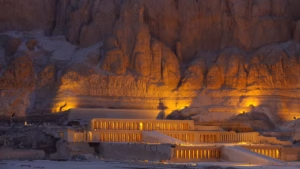
The temple of Hatshepsut has a cultural significance and is also one of the most elegant ancient monuments in the list of Egypt’s wonders. It is dedicated to Queen Hatshepsut, who is widely known as one of the most powerful female pharaohs in the ancient Egyptian scriptures. The temple is situated among the majestic limestone cliffs, which blend nature, architecture, and divine symbolism.
What Is the History of the Mortuary Temple of Hatshepsut?
Hatshepsut commissioned the temple to ensure her eternal worship and divine legacy.
Her chief architect, Senenmut, designed the structure and ensured that it gets completed After her death, several attempts were made to erase her name and images, likely by Thutmose III.
Despite this, the temple survived and was later restored and renovated. During the invasion of Europeans and Alexander the Great, it later served as a Coptic Christian monastery, influencing the name Deir el-Bahari. From the memory of the great female pharaoh to the Coptic Christian monastery, this temple does not just hold the stories of the pharaohs but also the marks of the invasions on the Egyptian land from centuries ago.
What is the significance of the mortuary temple of Hatshepsut?
The place is used for rituals honoring the pharaoh’s spirit after death. The temple connected Hatshepsut to Amun-Ra, the chief god of Thebes, present-day Luxor. It symbolized the transition from mortal ruler to divine being. Religious ceremonies and Egyptian practices ensured her rebirth in the afterlife. Travelers can see the carving, and inscriptions are provided by the tourism department for the explorer to understand the place better while on their tour on the itinerary of a boutique dahabiya in Egypt.
Where is the mortuary temple of Hatshepsut located?
on the west bank of the Nile near Luxor at Deir el-Bahari. It stands opposite the ancient city of Thebes (modern Luxor). Nearby sites include the Valley of the Kings and the Temple of Mentuhotep II. The West Bank was traditionally associated with death and the afterlife, making it ideal for mortuary temples.
Visit:- Temple of Queen Hatshepsut
When was the mortuary temple of Hatshepsut built?
The construction began around 1479 BCE and continued for nearly 20 years and was closely assisted by the chief architect, Senenmut. It was built dussssssring Hatshepsut’s reign in the 18th Dynasty.
Is Hatshepsut’s Temple worth visiting?
Yes, one of the best parts about it is its construction among the limestone cliffs. It offers a different experience from traditional column-filled temples. Well-preserved beliefs make history easy to understand even without a guide. It is very famous, especially for visitors interested in architecture, female leadership, and ancient Egyptian religion. On a well-planned itinerary of a luxury Dahabiya Nile cruise, travelers visit the temple while exploring the west bank of the Nile River in Luxor.
What can you see at the Hatshepsut Temple?
There are a number of unique things that make the temple one of the top tourist attractions in Egypt.
- Terraced Design: Three massive terraces connected by ramps created appealing ceilings of the monument.
- Reliefs of the Punt Expedition: Depict Egypt’s famous trade mission and how it was carried out during the reign of Hatshepsut.
- Divine Birth Scenes: cravings on the walls Show Hatshepsut’s claim to divine legitimacy.
- Statues of Hatshepsut: Often shown in male pharaonic form.
- Chapels: Dedicated to Hathor, Anubis, and Amun-Ra, major gods worshipped during the regime of the queen.
- Colonnades: Elegant columns framing panoramic views among the limestone cliffs make it look vibrant and completely majestic.
What time does the Temple of Hatshepsut open?
The temple generally opens at 6:00 AM. Closing time is usually around 5:00 PM. Early morning visits are ideal for cooler weather and fewer crowds. Timings may vary slightly depending on season and local regulations. People on the fixed itineraries of the 5-star small boat Nile cruise travel according to the plan with an assisted tour guide.
Travelling tips for Temple of Hatshepsut
- It is advised to wear comfortable shoes; ramps involve walking uphill.
- Carry water, especially in warmer months, and stay hydrated while exploring in the dry weather of Egypt.
- Photography is allowed in most areas, and there are spots where tourists can capture magical monuments.
- Always choose reputable and licensed travel partners like Swan Dahabiya.
Conclusion
The Temple of Hatshepsut is a masterpiece of architecture, political vision, and spiritual belief. It tells the story of a woman who ruled as king in a male-dominated world. The historical importance, beauty, and symbolism make it unforgettable and fascinating. experience for the travelers. Visiting the temple is not just sightseeing; it’s a journey into power, legacy, and eternity that reflects the richness of the Egyptian culture and heritage.
Other Useful Links: